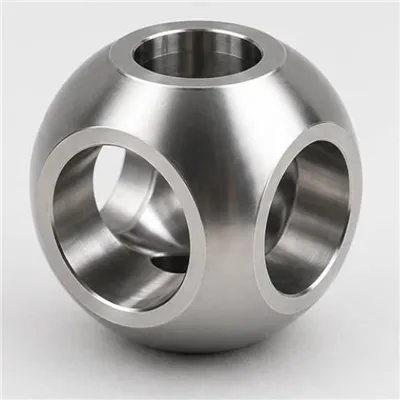
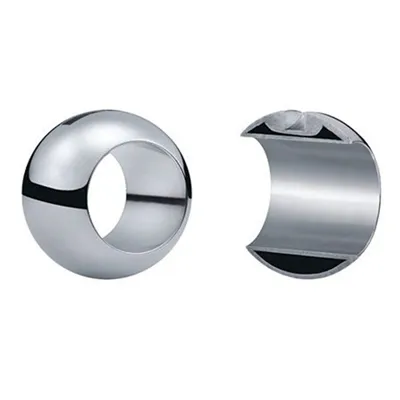
The shape of valve balls plays a crucial role in fluid dynamics, significantly influencing the performance of various fluid control systems. As a valve ball supplier, I have witnessed firsthand how different ball shapes can affect the flow characteristics, pressure drop, and overall efficiency of fluid handling processes. In this blog, I will delve into the impact of valve ball shape on fluid dynamics and explore the implications for different applications.
Basic Principles of Fluid Dynamics in Valve Systems
Before discussing the impact of valve ball shape, it's essential to understand the basic principles of fluid dynamics in valve systems. Fluid flow through a valve is governed by the laws of physics, including Bernoulli's principle and the conservation of mass. When fluid passes through a valve, its velocity, pressure, and direction can change depending on the valve's design and the shape of the valve ball.
The primary function of a valve is to control the flow of fluid by regulating the opening and closing of the valve passage. The valve ball is a critical component that determines the degree of flow restriction and the flow pattern within the valve. Different ball shapes can create different flow profiles, which in turn affect the performance of the valve and the overall fluid system.


Impact of Valve Ball Shape on Flow Characteristics
Spherical Valve Balls
Spherical valve balls are the most common type of valve balls used in fluid control systems. Their symmetrical shape allows for smooth and uniform flow distribution, minimizing turbulence and pressure drop. When the valve is fully open, the spherical ball provides a large flow area, enabling high flow rates with minimal resistance.
The spherical shape also ensures a tight seal when the valve is closed, preventing leakage and ensuring reliable shut-off. This makes spherical valve balls suitable for a wide range of applications, including water treatment, oil and gas, and chemical processing.
Non - Spherical Valve Balls
Non - spherical valve balls, such as elliptical or conical balls, can be used to achieve specific flow characteristics. For example, an elliptical valve ball can be designed to provide a more gradual change in flow rate as the valve opens or closes. This can be beneficial in applications where precise flow control is required, such as in some pharmaceutical or food processing industries.
Conical valve balls, on the other hand, can be used to create a more focused or directional flow. They are often used in applications where the fluid needs to be directed towards a specific area, such as in some irrigation systems or industrial spray nozzles.
Effect on Pressure Drop
Pressure drop is an important consideration in fluid systems, as it can affect the energy consumption and efficiency of the system. The shape of the valve ball can have a significant impact on pressure drop.
Spherical valve balls generally have a lower pressure drop compared to non - spherical balls. This is because their smooth and symmetrical shape allows the fluid to flow more freely, reducing the resistance to flow. In contrast, non - spherical balls may cause more turbulence and flow separation, leading to a higher pressure drop.
However, in some cases, a higher pressure drop may be desirable. For example, in a throttling valve application, a non - spherical ball can be used to create a controlled pressure drop to regulate the flow rate.
Impact on Flow Turbulence
Turbulence in fluid flow can cause several problems, including increased energy consumption, noise, and wear on the valve components. The shape of the valve ball can influence the level of turbulence in the flow.
Spherical valve balls tend to produce less turbulence compared to non - spherical balls. Their smooth surface and symmetrical shape allow the fluid to flow in a more laminar manner, reducing the formation of eddies and vortices. Non - spherical balls, especially those with sharp edges or irregular shapes, can create more turbulence as the fluid passes around them.
Applications and Considerations
Industrial Applications
In industrial applications, the choice of valve ball shape depends on the specific requirements of the fluid system. For high - flow applications, such as in large - scale water or gas pipelines, spherical valve balls are often preferred due to their low pressure drop and high flow capacity.
In applications where precise flow control is needed, non - spherical valve balls may be more suitable. For example, in chemical reactors, where the flow rate of reactants needs to be carefully regulated, an elliptical or conical valve ball can provide better control over the flow.
Residential Applications
In residential applications, such as in plumbing systems, spherical valve balls are commonly used due to their reliability and ease of operation. They can provide a tight seal and allow for efficient flow control, ensuring the proper functioning of the plumbing system.
Types of Valve Balls and Their Shapes
As a valve ball supplier, we offer a variety of valve balls, including Hollow Valve Ball, Hard-sealed Valve Ball, and Soft-Sealed Balls. Each type of valve ball has its own unique shape and characteristics, which can affect fluid dynamics in different ways.
Hollow valve balls are often used in applications where weight reduction is important. Their hollow design can reduce the overall weight of the valve, making it easier to install and operate. However, the hollow shape may also affect the flow characteristics, as it can create additional turbulence and pressure drop.
Hard - sealed valve balls are designed to provide a tight seal under high - pressure and high - temperature conditions. Their shape is optimized to ensure a reliable shut - off, even in demanding applications. Soft - sealed balls, on the other hand, are more suitable for applications where a low - leakage seal is required at lower pressures.
Conclusion
The shape of valve balls has a profound impact on fluid dynamics, influencing flow characteristics, pressure drop, and turbulence. As a valve ball supplier, we understand the importance of selecting the right valve ball shape for each application. Whether it's a spherical ball for high - flow applications or a non - spherical ball for precise flow control, we can provide the appropriate valve balls to meet your specific needs.
If you are looking for high - quality valve balls for your fluid control system, we invite you to contact us for a detailed discussion. Our team of experts can help you select the best valve ball shape and type based on your requirements, ensuring optimal performance and efficiency of your fluid system.
References
- White, F. M. (2006). Fluid Mechanics. McGraw - Hill.
- Munson, B. R., Young, D. F., & Okiishi, T. H. (2009). Fundamentals of Fluid Mechanics. Wiley.
- Streeter, V. L., & Wylie, E. B. (1985). Fluid Mechanics. McGraw - Hill.