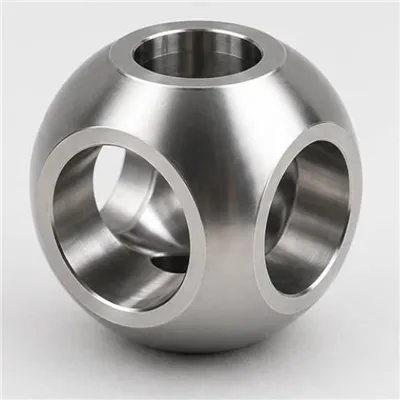
As a reliable four-way valve ball supplier, I understand the critical importance of pressure drop in the performance of four-way valve balls. Pressure drop is a fundamental concept in fluid mechanics and has a profound impact on the efficiency and functionality of four-way valve ball systems. In this blog, we will explore what pressure drop across a four-way valve ball is, the factors affecting it, and its significance in various applications.


Understanding Pressure Drop
Pressure drop, often denoted as $\Delta P$, is the difference in pressure between two points in a fluid system. In the context of a four-way valve ball, it refers to the decrease in pressure that occurs as the fluid flows through the valve. This pressure decrease is a result of several factors, including friction, changes in flow direction, and expansion or contraction of the fluid.
The pressure drop across a four-way valve ball can be measured using pressure sensors placed upstream and downstream of the valve. The measurement is crucial for assessing the performance of the valve and ensuring that the system operates within the desired parameters. A significant pressure drop can indicate issues such as blockages, improper valve sizing, or excessive fluid resistance, which can lead to reduced system efficiency and potential damage to other components.
Factors Affecting Pressure Drop in Four-Way Valve Balls
Geometry of the Valve Ball
The shape and dimensions of the four-way valve ball play a crucial role in determining the pressure drop. A well-designed valve ball with smooth contours and optimized flow passages can minimize the disruption of the fluid flow, resulting in a lower pressure drop. For example, a valve ball with sharp edges or rough surfaces can cause turbulence in the fluid, increasing the friction and thus the pressure drop.
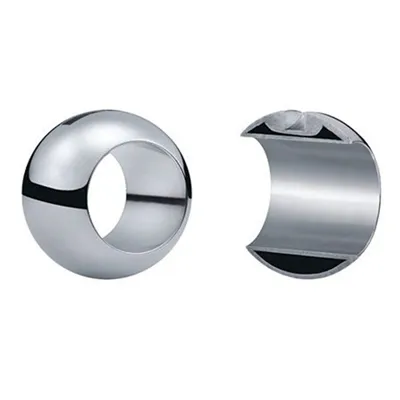
There are different types of valve balls, including Trunnion Valve Ball, Solid Valve Ball, Floating Valve Ball, Hollow Valve Ball, and Three-way Valve Ball. Each type has its own unique geometry and characteristics, which can affect the pressure drop differently. For instance, a trunnion valve ball, which is supported by trunnions at the top and bottom, can provide more stable flow control and potentially lower pressure drop compared to some other types.
Fluid Properties
The properties of the fluid flowing through the four-way valve ball also have a significant impact on the pressure drop. Viscosity is one of the key fluid properties that affect the flow resistance. A highly viscous fluid, such as oil, will experience more resistance to flow compared to a less viscous fluid, like water. As a result, the pressure drop across the valve ball will be higher for a more viscous fluid.
Density is another important fluid property. A denser fluid will have a greater momentum, which can influence the pressure drop. Additionally, the temperature of the fluid can affect its viscosity and density, further impacting the pressure drop. For example, increasing the temperature of a fluid can generally reduce its viscosity, leading to a lower pressure drop.
Flow Rate
The flow rate of the fluid through the four-way valve ball is directly related to the pressure drop. According to the principles of fluid mechanics, an increase in flow rate will typically result in an increase in pressure drop. This is because a higher flow rate means more fluid is passing through the valve per unit time, which creates more friction and turbulence. However, the relationship between flow rate and pressure drop is not always linear and can be affected by other factors, such as the valve geometry and fluid properties.
Significance of Pressure Drop in Applications
Industrial Processes
In many industrial processes, the control of pressure drop across four-way valve balls is essential for maintaining the efficiency and reliability of the system. For example, in chemical processing plants, precise control of fluid flow and pressure is required to ensure the proper mixing and reaction of chemicals. A high pressure drop can lead to insufficient flow rates, which may affect the quality of the final product. In oil and gas production, the pressure drop across valve balls in pipelines can impact the overall production efficiency and the safety of the operation.
HVAC Systems
In heating, ventilation, and air conditioning (HVAC) systems, four-way valve balls are used to control the flow of refrigerant. The pressure drop across these valve balls can affect the performance of the entire HVAC system. A significant pressure drop can reduce the cooling or heating capacity of the system, increase energy consumption, and cause premature wear and tear of the components. Therefore, selecting a four-way valve ball with an appropriate pressure drop characteristic is crucial for the efficient operation of HVAC systems.
Water Supply and Distribution
In water supply and distribution networks, the pressure drop across four-way valve balls can influence the water flow rate and pressure at different points in the system. A high pressure drop can result in reduced water pressure at the end-users' taps, which can be inconvenient and may not meet the required water demand. By carefully considering the pressure drop in valve ball selection, water utilities can ensure a consistent and reliable water supply to consumers.
How to Minimize Pressure Drop
Optimal Valve Design
One of the most effective ways to minimize pressure drop is to choose a four-way valve ball with an optimal design. This includes selecting a valve ball with smooth and streamlined flow passages, proper sizing, and the right type for the specific application. Our company offers a wide range of four-way valve balls with different designs and specifications to meet the diverse needs of our customers. We can provide technical support and advice to help you select the valve ball that will minimize the pressure drop in your system.
Regular Maintenance
Regular maintenance of the four-way valve ball is also important for minimizing pressure drop. Over time, valve balls can accumulate dirt, debris, and scale, which can increase the flow resistance and cause a higher pressure drop. By performing routine cleaning and inspection, you can ensure that the valve ball operates smoothly and efficiently. Additionally, checking for any signs of wear and tear and replacing damaged components in a timely manner can help maintain the optimal performance of the valve.
Conclusion
In conclusion, the pressure drop across a four-way valve ball is a critical parameter that affects the performance and efficiency of fluid systems. Understanding the factors that influence pressure drop, such as valve geometry, fluid properties, and flow rate, is essential for selecting the right valve ball and ensuring the proper operation of the system. As a four-way valve ball supplier, we are committed to providing high-quality products and technical expertise to help our customers optimize their systems and minimize pressure drop.
If you are in need of four-way valve balls or have any questions about pressure drop and valve selection, please feel free to contact us for a detailed consultation and procurement discussion. We look forward to working with you to meet your valve ball requirements.
References
- Munson, B. R., Young, D. F., & Okiishi, T. H. (2009). Fundamentals of Fluid Mechanics. John Wiley & Sons.
- Crane Co. (1988). Flow of Fluids Through Valves, Fittings, and Pipe. Technical Paper No. 410.