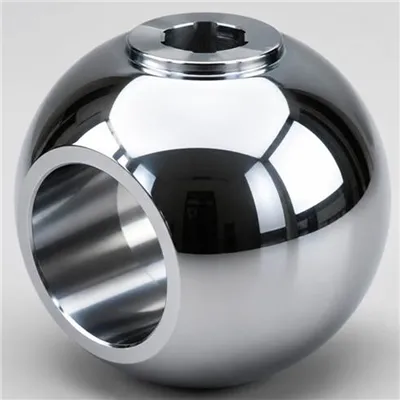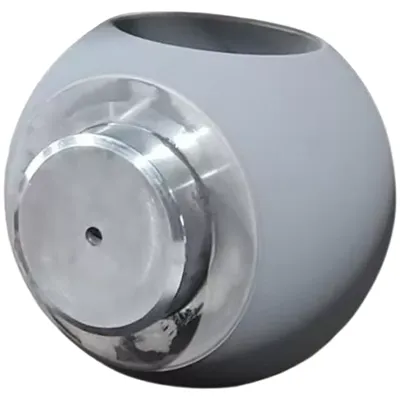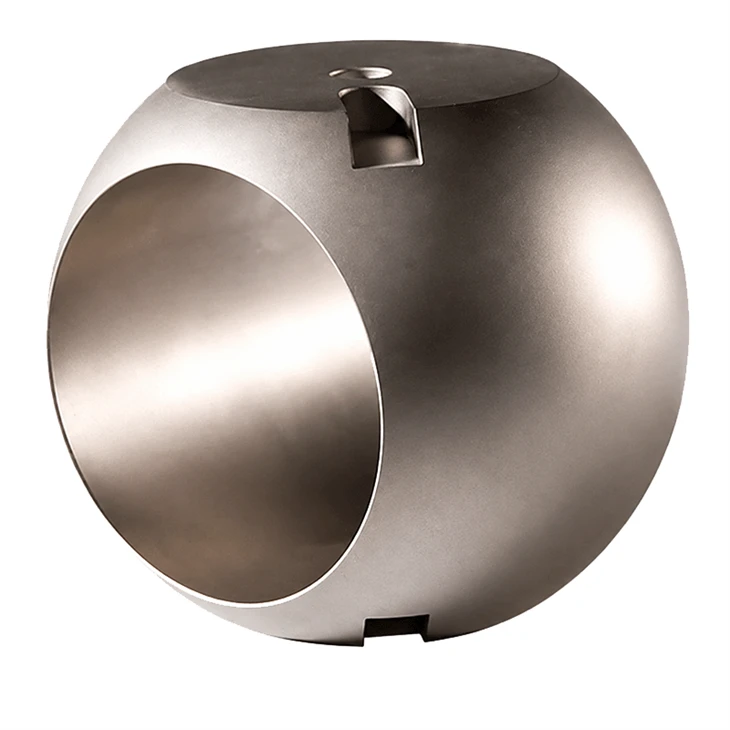
Zhejiang Jigong Valve Co., Ltd. is one of the most reliable manufacturers and suppliers of hardfaced valve balls in China. If you're going to wholesale cheap hardfaced valve balls made in China, welcome to get pricelist from our factory. All customized products are with high quality and low price.
Basic Introduction
Hardfaced valve balls are manufactured by applying high-performance cemented carbide layers (such as Stellite, tungsten carbide, chromium carbide, etc.) onto the sealing surfaces of the spherical substrate through advanced surface strengthening processes, forming a composite structure with metallurgical bonding or high-strength mechanical interlocking. This unique design retains the excellent toughness and impact resistance of the base material while imparting extreme hardness, wear resistance, erosion resistance, high-temperature resistance, and corrosion resistance to the surface. It effectively withstands long-term composite attack from media containing solid particles, high-velocity fluids, and highly corrosive chemicals. The hardened layer can reach millimeter-level thickness with strong adhesion, resisting peeling and cracking. Various carbide materials are available to suit specific service conditions. The product is especially ideal for severe applications in coal chemical, slurry transport, power generation, and petroleum refining industries where high abrasion, intense erosion, high temperature, and high pressure are prevalent, making it a key component for extending valve service life and operational reliability.
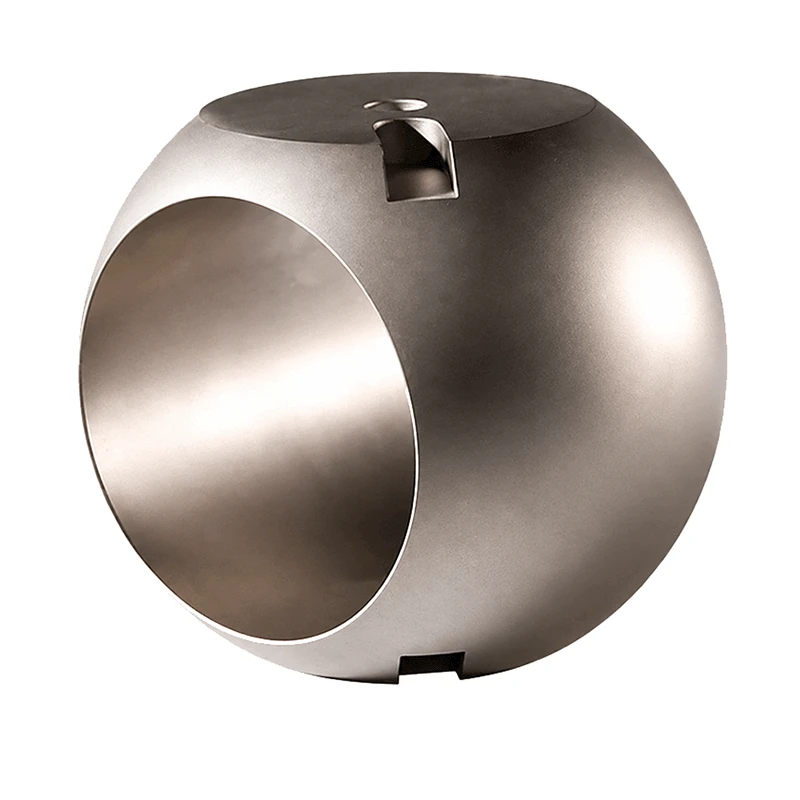
Product Specification
|
Indicator items |
Technical specifications |
|
Size range |
1/2" to 56" (supports non-standard customization) |
|
Pressure rating |
PN16-PN420(Class150-4500) |
|
Spherical substrate material |
Carbon steel, stainless steel 304/316, alloy steel, etc |
|
Hardened layer material |
Stellite, tungsten carbide (WC), chromium carbide (CrC), nickel-based cemented carbide, and other options are available |
|
Manufacturing process |
Precision machining of the substrate + surface overlay welding / spraying hardening treatment + precision grinding and polishing of the hardened layer |
|
Surface hardness |
HRC 55~70 (Metal Hardening Layer) / HRA 85+ (Ceramic Hardening Layer) |
|
Coaxiality |
≤0.05mm |
|
Roundness accuracy |
≤0.02mm |
|
Surface roughness |
Ra ≤ 0.4 μm (sealing surface) |
|
Outer diameter tolerance |
1/2" – 4": +0.03 mm |
|
Inner diameter tolerance |
1/2" – 4": 0~+0.03 mm |
|
Applicable temperature |
-196°C to 1200°C (depending on hardened layer and substrate material) |
Product Features
- Sealing surface reinforced by overlay / thermal spray cemented carbide, providing extremely high surface hardness while retaining substrate toughness for excellent impact resistance
- Hardfacing materials include Stellite, tungsten carbide, chromium carbide, etc., allowing flexible selection to match different wear types and corrosive media
- Strong metallurgical bonding between the hardened layer and substrate ensures excellent impact toughness, withstanding alternating stress from large-particle erosion and frequent cycling
- Superior high-temperature performance – maintains hardness and corrosion resistance even at elevated temperatures, suitable for high-temperature steam and thermal media
- Effectively resists scoring and gouging on sealing surfaces caused by hard particles, significantly reducing internal leakage risks
- Compared to solid carbide balls, offers better impact toughness; the hardened layer can be repaired by weld overlay when worn, reducing life-cycle cost
Product Application Scope / Usage Scenarios
Applicable media:
Slurries containing solid particles, mineral slurry, coal slurry, fly ash gas‑solid two‑phase flow, high‑temperature steam, acidic/alkaline corrosive media, sour oil/gas, black water/grey water, etc.
Applicable operating conditions:
High‑wear particle erosion, high temperature & high pressure, strong corrosion, high‑velocity flow erosion, and frequent cycling loads – especially where impact and abrasion coexist.
Application fields:
Coal chemical (gasifier lock hopper valves, black water control valves), slurry pipelines, power industry (desulfurization, slag handling), petroleum refining (FCC, hydrogenation), metallurgy & mining, cement & building materials, and other heavy‑industry fluid control systems.
FAQ
What are the core advantages of hardfaced valve balls?
Hardfaced valve balls form a cemented carbide reinforced layer on the sealing surface via overlay welding or thermal spraying, delivering extreme wear, erosion, high‑temperature, and corrosion resistance while the tough substrate absorbs impact loads. The composite structure excels in severe conditions where both abrasion and impact are present, significantly extending valve service life and reliability.
What are the common hardfacing materials and how to select them?
Common materials include Stellite (cobalt‑based), tungsten carbide (WC), chromium carbide (Cr₃C₂), and nickel‑based carbides. Stellite offers balanced high‑temperature, corrosion, and impact resistance; WC delivers the highest hardness for abrasive wear; CrC performs better in high‑sulfur, oxidizing environments at elevated temperatures. Selection depends on media composition, temperature, particle size, and impact severity. Our team can assist with tailored recommendations.
What is the difference between hardfaced valve balls and solid tungsten carbide (TCC) valve balls?
Solid tungsten carbide balls are homogeneously hard but brittle, with poor impact resistance – they are prone to cracking under severe shock. Hardfaced balls, in contrast, feature a tough steel substrate with a hard surface layer, combining high surface hardness with excellent impact toughness. Moreover, the hardened layer can be repaired by re‑overlaying when worn, reducing replacement costs. Thus, hardfaced balls are more suitable for conditions with both impact and abrasion, while TCC balls are better for pure abrasion without significant impact.
Will the hardfaced layer peel or crack during service?
With proper material selection and mature process control, the overlay or spray layer forms a metallurgical bond or high‑strength mechanical interlock with the substrate, complemented by transition layers and stress relief measures, resulting in excellent impact toughness. Under normal operating conditions, the layer will not peel or crack and can provide long‑term stable service. For extreme alternating loads or thermal cycling, we offer customized process solutions to further enhance durability.
Hot Tags: hardfaced valve balls, China hardfaced valve balls manufacturers, suppliers, factory, by spray, Chromium Carbide CRC Valve Ball, Electroless Nickel Plated ENP Valve Ball, Hard Chrome Plated Valve Ball, Inconel Alloy Valve Ball, Tungsten Carbide TCC Valve Ball