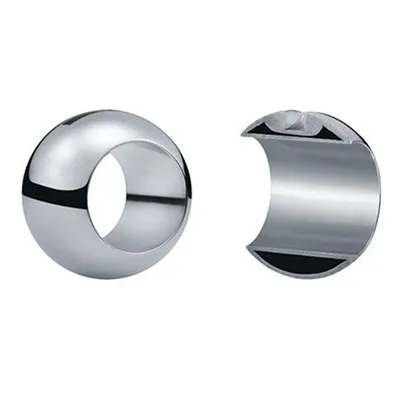
The L - Port Valve Ball is a crucial component in many fluid control systems. As a reliable supplier of L - Port Valve Balls, I have witnessed its wide - spread applications and the unique influence it has on fluid flow within various industries. In this blog, we will delve into an in - depth exploration of the impact of the L - Port Valve Ball on the fluid's chemical composition.
Understanding the L - Port Valve Ball
Before discussing its impact on fluid chemical composition, it is essential to understand what an L - Port Valve Ball is. The L - Port Valve Ball, as the name suggests, has an L - shaped passage through its center. This design allows for the redirection of fluid flow between two different ports in a valve system. Compared with other types of valve balls like the F - Port Valve Ball and T - Port Valve Ball, the L - Port Valve Ball offers a distinct functionality in terms of flow control. You can find more detailed information about L - Port Valve Balls on our L - Port Valve Ball webpage.
Valve balls are used in diverse industries such as chemical processing, oil and gas, water treatment, and food and beverage. Each industry has unique requirements for fluid handling, and the choice of valve ball is crucial for ensuring the proper operation of the system.
Direct Physical Effects on Fluid Chemical Composition
One of the primary ways the L - Port Valve Ball can impact the fluid's chemical composition is through physical interactions. The material of the valve ball itself can have a direct influence. Common materials used for L - Port Valve Balls include stainless steel, brass, and ceramic.
Stainless steel is a popular choice due to its corrosion - resistance and durability. However, in certain highly acidic or alkaline environments, trace amounts of metals from the stainless steel valve ball may leach into the fluid. This can lead to a change in the fluid's chemical composition, especially if the fluid is sensitive to metal contaminants. For example, in a chemical process where the presence of iron ions can catalyze unwanted side - reactions, the leaching of iron from a stainless - steel L - Port Valve Ball could be a significant concern.
Brass valve balls, on the other hand, consist mainly of copper and zinc. In some cases, the zinc in brass can react with certain fluids, particularly those containing sulfur compounds. This reaction can form zinc sulfide precipitates, which not only changes the chemical composition of the fluid but also has the potential to clog the valve system over time.
Ceramic valve balls are known for their chemical inertness. They are less likely to react with the fluid flowing through them, making them an ideal choice for applications where maintaining the purity of the fluid's chemical composition is of utmost importance. For instance, in pharmaceutical manufacturing or high - purity water treatment, ceramic L - Port Valve Balls can ensure that the fluid remains free from contamination due to valve - induced chemical reactions.
Indirect Impact through Flow Control
The L - Port Valve Ball's function in controlling fluid flow can also have an indirect impact on the fluid's chemical composition. By altering the flow path, mixing ratios, and residence time of the fluid in different parts of the system, the valve ball can influence chemical reactions occurring within the fluid.
In a continuous chemical reaction system, the L - Port Valve Ball can be used to control the mixing of reactants. For example, if two different chemical solutions need to be combined in a specific ratio, the L - Port Valve Ball can regulate the flow of each solution into the reaction chamber. An improper flow ratio can lead to incomplete reactions or the formation of unwanted by - products, thus changing the chemical composition of the final product.
Residence time, which is the time a fluid spends in a particular part of the system, is another factor affected by the L - Port Valve Ball. In some chemical reactions, a certain residence time is required for the reaction to reach completion. If the L - Port Valve Ball causes the fluid to pass through the reaction zone too quickly or too slowly, the reaction kinetics can be disrupted. This may result in an altered chemical composition of the fluid as the reaction may not proceed to the desired extent.
Impact on Fluid Stability
The design of the L - Port Valve Ball can also affect the stability of the fluid's chemical composition. Turbulence created by the valve ball during fluid flow can have both positive and negative effects.
On one hand, a certain level of turbulence can enhance the mixing of different components in the fluid. This can be beneficial in ensuring a homogeneous chemical composition, especially in systems where multiple substances need to be uniformly distributed. For example, in a chemical blending process, the turbulence generated by the L - Port Valve Ball can promote better interaction between different chemicals, leading to a more consistent product.


On the other hand, excessive turbulence can cause shear stress on the fluid. In some cases, this shear stress can break down large molecules in the fluid, leading to a change in its chemical composition. For instance, in a polymer - based fluid, high - shear conditions can cause chain scission, which reduces the molecular weight of the polymer and alters its chemical and physical properties.
Considerations in Different Industries
In the chemical processing industry, the impact of the L - Port Valve Ball on fluid chemical composition is a critical consideration. Different chemical processes have strict requirements for the purity and composition of the fluids involved. For example, in the production of specialty chemicals, even a minor change in the fluid's chemical composition can affect the quality and performance of the final product. Therefore, careful selection of the valve ball material and design is necessary to minimize the risk of chemical contamination.
In the oil and gas industry, the L - Port Valve Ball is used in various processes such as wellhead control, pipeline transportation, and refining. The fluids in these processes, such as crude oil and natural gas, contain a complex mixture of hydrocarbons, water, and various impurities. The valve ball's impact on the fluid's chemical composition can affect the efficiency of separation processes, the corrosion rate of the pipeline, and the quality of the refined products.
In the food and beverage industry, maintaining the integrity of the fluid's chemical composition is crucial for product safety and quality. The use of L - Port Valve Balls made from food - grade materials is essential to prevent any contamination of the food or beverage products. Additionally, the valve ball should not react with the fluids, which could lead to changes in taste, odor, or appearance.
Conclusion and Call to Action
In conclusion, the L - Port Valve Ball can have a significant impact on the fluid's chemical composition through direct physical interactions, indirect flow control effects, and its influence on fluid stability. As a reliable supplier of high - quality L - Port Valve Balls, we understand the importance of these factors in different industries. Our products are designed to minimize the negative impact on fluid chemical composition while providing efficient and reliable flow control.
If you are looking for L - Port Valve Balls for your specific application, we are here to help. Our team of experts can provide you with valuable advice on material selection, design optimization, and installation. Feel free to contact us to start a discussion about your procurement needs and explore how our L - Port Valve Balls can meet your requirements.
References
- Perry, R. H., & Green, D. W. (Eds.). (2008). Perry's Chemical Engineers' Handbook. McGraw - Hill.
- Incropera, F. P., & DeWitt, D. P. (2001). Fundamentals of Heat and Mass Transfer. Wiley.
- Coulson, J. M., & Richardson, J. F. (1999). Chemical Engineering. Butterworth - Heinemann.