As a reputable T - Port Valve Ball supplier, I am often asked about the chemical resistance properties of our product. Understanding these properties is crucial, as it directly impacts the valve ball's performance, longevity, and suitability for various industrial applications. In this blog, I will delve into the chemical resistance characteristics of T - Port Valve Balls, exploring what makes them a reliable choice in environments where exposure to different chemicals is a concern.
Understanding the T - Port Valve Ball
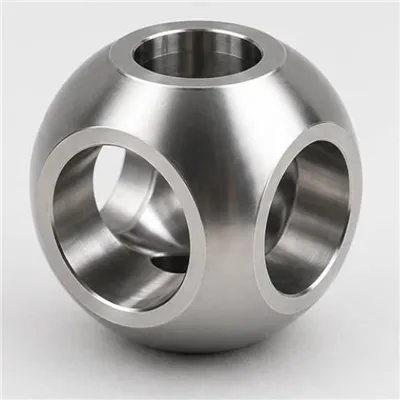
Before we discuss chemical resistance, let's briefly understand what a T - Port Valve Ball is. The T - Port Valve Ball is a type of valve ball used in ball valves. Its unique T - shaped port allows for three - way flow control, enabling the redirection of fluid or gas in different directions. This design provides flexibility in pipeline systems, making it suitable for applications such as mixing, diverting, or isolating fluids.
Factors Affecting Chemical Resistance
The chemical resistance of a T - Port Valve Ball is determined by several factors.
Material Composition
The material from which the valve ball is made plays a pivotal role in its chemical resistance. Common materials used for T - Port Valve Balls include stainless steel, ceramic, and various polymers.
- Stainless Steel: Stainless steel valve balls are popular due to their excellent mechanical properties and corrosion resistance. They are typically resistant to a wide range of chemicals, including mild acids, alkalis, and water. The presence of chromium in stainless steel forms a passive oxide layer on the surface, which acts as a barrier against corrosion. For example, 316 stainless steel is particularly well - known for its resistance to chloride - containing environments, making it suitable for applications in the marine and chemical industries.
- Ceramic: Ceramic valve balls offer outstanding chemical resistance, especially against strong acids and alkalis. They are highly inert materials, which means they do not react easily with most chemicals. Ceramics are also resistant to abrasion, making them suitable for applications where the fluid contains solid particles. However, they are relatively brittle compared to metals, so care must be taken during installation and operation.
- Polymers: Polymers such as PTFE (Polytetrafluoroethylene) and PEEK (Polyetheretherketone) are used for their excellent chemical resistance and low friction properties. PTFE is resistant to almost all chemicals, including strong acids, bases, and organic solvents. It is often used as a coating on metal valve balls to enhance their chemical resistance and reduce friction.
Temperature and Pressure
The temperature and pressure of the chemical environment also influence the valve ball's chemical resistance. High temperatures can accelerate chemical reactions, potentially reducing the effectiveness of the protective layer on the valve ball's surface. Similarly, high pressures can cause the chemical to penetrate the valve ball material more easily, leading to corrosion or degradation. Therefore, it is essential to select a T - Port Valve Ball that is rated for the specific temperature and pressure conditions of the application.
Chemical Resistance in Different Environments
Acidic Environments
In acidic environments, the choice of material for the T - Port Valve Ball is crucial. Stainless steel valve balls can withstand mild acidic solutions, but for stronger acids, ceramic or polymer - coated valve balls are a better choice. For example, in the chemical processing industry, where sulfuric acid or hydrochloric acid is commonly used, ceramic valve balls can provide long - term resistance without significant degradation.
Alkaline Environments
Alkalis, such as sodium hydroxide and potassium hydroxide, can also be corrosive to valve balls. Stainless steel valve balls are generally resistant to mild alkaline solutions, but for more concentrated alkalis, ceramic valve balls are preferred. PTFE - coated valve balls also offer good resistance to alkalis, as PTFE is highly inert to most chemicals.
Organic Solvents
Organic solvents, such as benzene, toluene, and acetone, can dissolve or swell certain materials. Polymers like PTFE and PEEK are generally resistant to most organic solvents, making them suitable for applications involving these chemicals. Stainless steel valve balls can also be used in some cases, but it is important to ensure that the specific grade of stainless steel is compatible with the solvent.
Comparison with Other Port Types
When considering the chemical resistance of T - Port Valve Balls, it is also useful to compare them with other port types, such as F - Port Valve Ball, X - Port Valve Ball, L - Port Valve Ball, and V - Port Valve Ball.
In general, the chemical resistance properties of these different port types are similar, as they are mainly determined by the material of the valve ball. However, the design of the port can affect the flow characteristics and the distribution of the chemical within the valve. For example, the T - Port design allows for more complex flow patterns, which may expose the valve ball to different chemical concentrations in different parts of the port.


Importance of Chemical Resistance in Industrial Applications
The chemical resistance of T - Port Valve Balls is of utmost importance in industrial applications. In industries such as chemical processing, oil and gas, and water treatment, valve balls are constantly exposed to a variety of chemicals. A valve ball with poor chemical resistance can lead to corrosion, leakage, and ultimately, system failure. This can result in costly downtime, environmental pollution, and safety hazards.
By choosing a T - Port Valve Ball with appropriate chemical resistance, industries can ensure the reliable operation of their pipeline systems. This not only reduces maintenance costs but also improves the overall efficiency and safety of the process.
Conclusion and Call to Action
In conclusion, the chemical resistance of T - Port Valve Balls is a critical factor that determines their performance and suitability for different industrial applications. The material composition, temperature, and pressure of the chemical environment all play important roles in determining the valve ball's chemical resistance. As a T - Port Valve Ball supplier, we offer a wide range of materials and designs to meet the diverse needs of our customers.
If you are in the market for high - quality T - Port Valve Balls with excellent chemical resistance, we invite you to contact us for a detailed discussion. Our team of experts can help you select the most suitable valve ball for your specific application, ensuring optimal performance and long - term reliability. Let's work together to find the perfect solution for your industrial needs.
References
- Perry, R. H., & Green, D. W. (2008). Perry's Chemical Engineers' Handbook. McGraw - Hill.
- ASM Handbook Committee. (1994). ASM Handbook: Volume 13A: Corrosion: Fundamentals, Testing, and Protection. ASM International.
- Schaschke, D. (2016). The Basics of Chemical Resistance in Ball Valves. Valve Magazine.