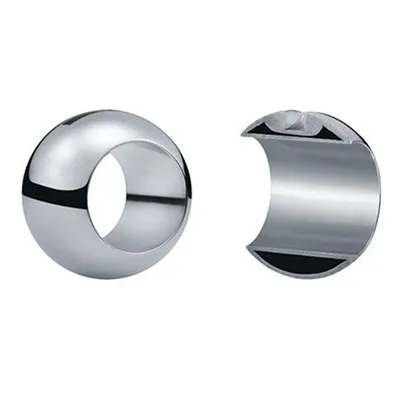
What are the limitations of a three - way valve ball?
As a supplier of three - way valve balls, I've had the opportunity to work closely with these essential components in various industrial applications. While three - way valve balls offer significant advantages in terms of flow control and versatility, they are not without their limitations. Understanding these limitations is crucial for both our customers and us as a supplier, as it helps in making informed decisions regarding their use and application.
1. Limited Flow Capacity
One of the primary limitations of three - way valve balls is their relatively limited flow capacity compared to some other types of valves. The design of a three - way valve ball involves a spherical ball with ports that control the flow of fluid. The size of these ports and the internal geometry of the valve can restrict the amount of fluid that can pass through the valve.
In applications where high flow rates are required, such as large - scale industrial processes or water distribution systems, the limited flow capacity of a three - way valve ball may become a bottleneck. For example, in a chemical processing plant where large volumes of chemicals need to be transferred quickly, a three - way valve ball may not be able to handle the required flow rate efficiently. This can lead to reduced productivity and increased energy consumption as the system has to work harder to achieve the desired flow.
2. Pressure Drop
Another significant limitation is the pressure drop associated with three - way valve balls. When fluid flows through a three - way valve ball, the change in direction and the restriction caused by the ball and its ports result in a loss of pressure. This pressure drop can have a negative impact on the overall performance of the system.
In systems where maintaining a specific pressure is critical, such as in hydraulic systems or high - pressure pipelines, the pressure drop across a three - way valve ball can cause problems. It may require additional pumps or pressure - boosting equipment to compensate for the loss of pressure, which increases the cost and complexity of the system.
3. Limited Temperature and Pressure Range
Three - way valve balls are typically designed to operate within a specific temperature and pressure range. Beyond this range, the performance and reliability of the valve can be compromised.
For high - temperature applications, the materials used in the valve ball and its seals may not be able to withstand the extreme heat. This can lead to deformation of the ball, leakage, or failure of the valve. Similarly, in high - pressure applications, the valve may not be able to handle the stress, resulting in damage to the valve components.
For instance, in a steam power plant where high - temperature and high - pressure steam is used, a three - way valve ball may need to be carefully selected to ensure it can operate within the required temperature and pressure limits. Using a valve that is not suitable for the application can lead to safety hazards and costly downtime.
4. Wear and Tear
The continuous movement of the valve ball and the interaction with the fluid can cause wear and tear over time. The ball and its seats are subject to friction, erosion, and corrosion, which can affect the performance and lifespan of the valve.
In applications where the fluid contains abrasive particles or corrosive substances, the wear and tear on the three - way valve ball can be accelerated. This can lead to leakage, reduced flow control accuracy, and ultimately, the need for frequent maintenance and replacement of the valve.
For example, in a mining operation where the fluid being transported contains sand and other abrasive materials, the three - way valve ball may experience significant wear. Regular inspection and maintenance are required to ensure the valve continues to function properly.
5. Complexity of Installation and Maintenance
Three - way valve balls are more complex in design compared to some other types of valves. This complexity can make the installation and maintenance process more challenging.
During installation, proper alignment and calibration of the valve are crucial to ensure its correct operation. Any misalignment can lead to leakage or improper flow control. Additionally, the internal components of the valve, such as the ball and its seals, need to be carefully installed to prevent damage.
Maintenance of three - way valve balls also requires specialized knowledge and tools. The disassembly and reassembly of the valve need to be done correctly to avoid damaging the components. This can increase the cost and time associated with maintenance.
6. Cost
Three - way valve balls can be more expensive compared to other types of valves. The complex design, high - quality materials, and precision manufacturing required for these valves contribute to their higher cost.
For customers on a tight budget, the cost of three - way valve balls may be a significant factor in their decision - making process. In some cases, they may opt for less expensive valve options, even if they do not offer the same level of performance or versatility.
However, it's important to note that the cost of a three - way valve ball should be considered in the context of its long - term performance and reliability. In many applications, the benefits of using a high - quality three - way valve ball outweigh the initial cost.
Different Types of Valve Balls and Their Implications
There are different types of valve balls, such as Trunnion Valve Ball, Solid Valve Ball, and Valve Stem Ball. Each type has its own characteristics and limitations.


Trunnion valve balls are designed to handle high - pressure applications. However, they may be more expensive and have a more complex installation process. Solid valve balls are known for their durability but may have limitations in terms of flow capacity. Valve stem balls are often used in specific applications where precise control is required, but they may be more prone to wear and tear.
Conclusion
While three - way valve balls offer many advantages in terms of flow control and versatility, they also have several limitations. These limitations include limited flow capacity, pressure drop, restricted temperature and pressure range, wear and tear, complexity of installation and maintenance, and cost.
As a supplier of three - way valve balls, we understand the importance of helping our customers make the right choices. We work closely with them to assess their specific needs and recommend the most suitable valve solution. If you are considering using three - way valve balls in your application, we encourage you to contact us for a detailed discussion. Our team of experts can provide you with valuable insights and guidance to ensure you get the best performance and value from your valve investment.
References
- Engineering Handbook of Valves and Actuators
- Industrial Valve Design and Application Manual