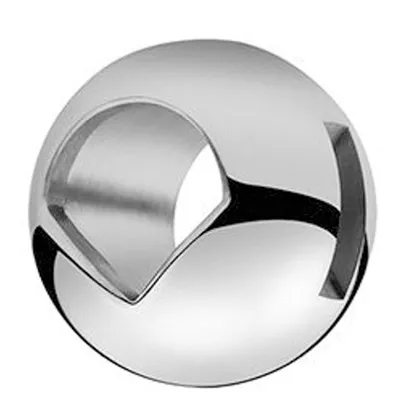
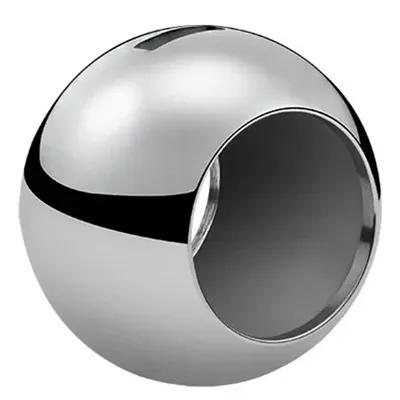
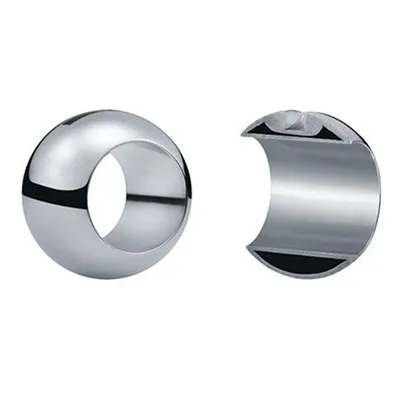
Hey there! As a supplier of F - Port Valve Balls, I often get asked about how to evaluate the static performance of these nifty little components. So, I thought I'd share some insights on this topic.
First off, let's understand what we mean by static performance. Static performance refers to how the F - Port Valve Ball behaves when it's not in motion, under a set of fixed conditions. It's all about how well it can hold up and do its job without any dynamic forces at play.
Leakage Rate
One of the most crucial aspects of evaluating the static performance of an F - Port Valve Ball is checking its leakage rate. A valve ball with a high leakage rate is a no - go. You don't want fluid or gas seeping through when it shouldn't. To measure the leakage rate, we usually use a pressure test. We apply a specific pressure to the valve ball and then measure how much fluid or gas escapes over a set period.
A good F - Port Valve Ball should have a very low leakage rate. In fact, for most industrial applications, the leakage rate should be close to zero. If you notice a significant amount of leakage, it could mean there are issues with the valve ball's sealing surface. Maybe it's not smooth enough, or there are some scratches or dents that are preventing a proper seal.
Pressure Rating
Another important factor is the pressure rating. The pressure rating tells you the maximum pressure that the F - Port Valve Ball can handle without failing. When evaluating the static performance, you need to make sure that the pressure rating of the valve ball is suitable for your application.
If you're using the valve ball in a high - pressure system, you'll need a valve ball with a high pressure rating. On the other hand, if it's for a low - pressure application, a lower pressure rating might be sufficient. But always err on the side of caution and choose a valve ball with a pressure rating that's higher than the maximum pressure you expect in your system.
Material Quality
The material of the F - Port Valve Ball also plays a huge role in its static performance. Different materials have different properties, and these properties can affect how well the valve ball performs. For example, stainless steel is a popular choice because it's corrosion - resistant and strong. It can withstand high pressures and harsh environments.
Other materials like brass or plastic might be used for less demanding applications. When evaluating the static performance, you need to consider the material's hardness, wear resistance, and chemical resistance. A high - quality material will ensure that the valve ball lasts longer and performs better under static conditions.
Surface Finish
The surface finish of the F - Port Valve Ball is another key factor. A smooth surface finish is essential for a good seal. If the surface is rough, it can cause leakage and reduce the valve ball's performance. We use various techniques to achieve a smooth surface finish, such as grinding and polishing.
When evaluating the surface finish, you can use a surface roughness tester. This device measures the microscopic irregularities on the surface of the valve ball. A lower surface roughness value indicates a smoother surface, which is generally better for static performance.
Compatibility with Other Components
The F - Port Valve Ball doesn't work in isolation. It needs to be compatible with other components in the valve system, such as the valve seat and the stem. If there's a mismatch in materials or dimensions, it can lead to problems with the static performance.
For example, if the valve ball and the valve seat are made of incompatible materials, they might wear out quickly, leading to increased leakage. When evaluating the static performance, make sure that all the components are designed to work together harmoniously.
Comparing with Other Port Valve Balls
It's also a good idea to compare the F - Port Valve Ball with other types of port valve balls, like the T - Port Valve Ball, X - Port Valve Ball, and L - Port Valve Ball. Each type of port valve ball has its own unique characteristics and applications.


The T - Port Valve Ball, for example, is often used in applications where you need to divert or mix fluids. The X - Port Valve Ball is great for applications that require a high flow rate. And the L - Port Valve Ball is commonly used for on - off applications. By comparing the F - Port Valve Ball with these other types, you can get a better understanding of its strengths and weaknesses.
Final Thoughts
Evaluating the static performance of an F - Port Valve Ball is a multi - faceted process. You need to consider factors like leakage rate, pressure rating, material quality, surface finish, and compatibility with other components. By doing a thorough evaluation, you can ensure that you're getting a high - quality valve ball that will perform well in your application.
If you're in the market for F - Port Valve Balls or want to learn more about them, don't hesitate to reach out. We're here to help you find the perfect valve ball for your needs. Whether you're a small business or a large industrial operation, we've got the expertise and the products to meet your requirements. So, let's start a conversation and see how we can work together to get you the best F - Port Valve Balls.
References
- Valve Handbook: A Guide to Valve Technology and Applications
- Industrial Valve Standards and Best Practices