In the realm of industrial components, the question of recyclability is becoming increasingly important. As a supplier of F - Port Valve Balls, I've often been asked whether these essential parts can be recycled. In this blog post, I'll delve into the science behind F - Port Valve Balls, explore their recyclability, and share some insights on the broader implications of recycling in the valve ball industry.
Understanding F - Port Valve Balls
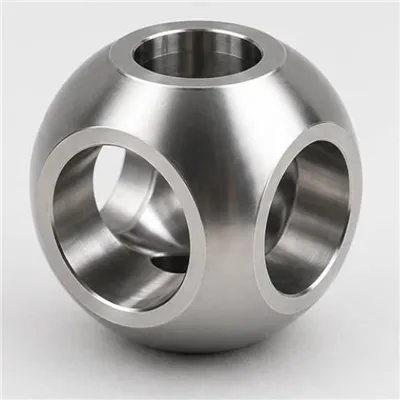
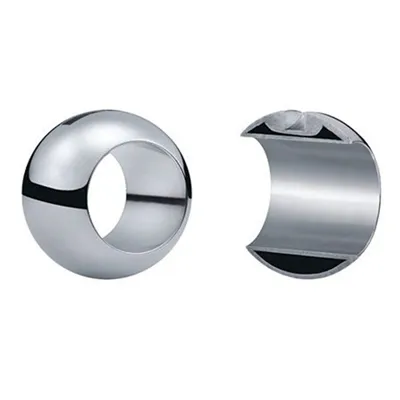
F - Port Valve Balls are a type of valve ball used in various industrial applications, particularly in fluid control systems. These valve balls are designed with an "F" - shaped port, which allows for precise control of fluid flow. The unique shape of the F - Port provides a distinct advantage in applications where specific flow patterns are required.
The F - Port Valve Ball is typically made from high - quality materials such as stainless steel, brass, or other alloys. These materials are chosen for their durability, corrosion resistance, and ability to withstand high pressures and temperatures. You can learn more about F - Port Valve Balls on our website F - Port Valve Ball.


The Recycling Process for F - Port Valve Balls
The recyclability of F - Port Valve Balls largely depends on the materials they are made of. For example, stainless steel valve balls are highly recyclable. Stainless steel is one of the most recycled materials in the world, with a recycling rate of over 80%. When stainless steel F - Port Valve Balls reach the end of their service life, they can be collected and sent to a recycling facility.
At the recycling facility, the valve balls are first sorted by material type. Then, they are melted down in a furnace at high temperatures. The molten metal is then purified to remove any impurities and cast into new forms, such as bars or sheets, which can be used to manufacture new valve balls or other metal products.
Brass F - Port Valve Balls can also be recycled. Brass is an alloy of copper and zinc, and both of these metals are valuable and can be recovered during the recycling process. Similar to stainless steel, brass valve balls are melted down and refined to produce new brass products.
Challenges in Recycling F - Port Valve Balls
While F - Port Valve Balls are generally recyclable, there are some challenges associated with the recycling process. One of the main challenges is the presence of coatings or surface treatments on the valve balls. Some valve balls may be coated with materials such as Teflon or other polymers to improve their performance. These coatings can make the recycling process more complex, as they need to be removed before the metal can be melted down.
Another challenge is the collection and transportation of used valve balls. Since F - Port Valve Balls are used in a wide range of industries, it can be difficult to collect them in large quantities. Additionally, transporting these heavy and bulky components to recycling facilities can be costly.
Comparison with Other Port Valve Balls
In addition to F - Port Valve Balls, there are other types of port valve balls, such as X - Port Valve Ball and T - Port Valve Ball. The recyclability of these valve balls is similar to that of F - Port Valve Balls. They are also typically made from recyclable materials such as stainless steel and brass, and the recycling process is generally the same.
However, the design and application of these valve balls may affect the ease of recycling. For example, X - Port Valve Balls have a more complex shape compared to F - Port Valve Balls, which may make them more difficult to recycle. On the other hand, T - Port Valve Balls are relatively simple in design and may be easier to recycle.
The Environmental and Economic Benefits of Recycling
Recycling F - Port Valve Balls offers several environmental and economic benefits. From an environmental perspective, recycling reduces the demand for virgin materials. Mining and extracting new metals require a significant amount of energy and can have a negative impact on the environment. By recycling valve balls, we can conserve natural resources and reduce greenhouse gas emissions.
Economically, recycling can be cost - effective. The cost of producing new valve balls from recycled materials is often lower than the cost of producing them from virgin materials. Additionally, recycling can create jobs in the recycling and manufacturing industries.
Encouraging Recycling in the Valve Ball Industry
As a supplier of F - Port Valve Balls, I am committed to promoting recycling in the valve ball industry. We encourage our customers to return their used valve balls to us for recycling. We also work with recycling facilities to ensure that the recycling process is efficient and environmentally friendly.
We believe that by working together, we can make a significant impact on the environment and the economy. If you are interested in learning more about our F - Port Valve Balls or our recycling initiatives, please feel free to contact us. We are always happy to discuss your requirements and provide you with the best solutions for your needs.
Conclusion
In conclusion, F - Port Valve Balls can be recycled, and the recycling process offers significant environmental and economic benefits. While there are some challenges associated with recycling, such as the presence of coatings and the collection of used valve balls, these challenges can be overcome with proper planning and collaboration.
As a supplier, we are dedicated to providing high - quality F - Port Valve Balls and promoting sustainable practices in the industry. If you are in the market for F - Port Valve Balls or have any questions about recycling, please don't hesitate to reach out. We look forward to the opportunity to work with you and contribute to a more sustainable future.
References
- Smith, J. (2020). Recycling of Industrial Metals. Journal of Environmental Science and Technology.
- Johnson, A. (2019). The Economic Benefits of Recycling in the Manufacturing Industry. Industrial Economics Review.