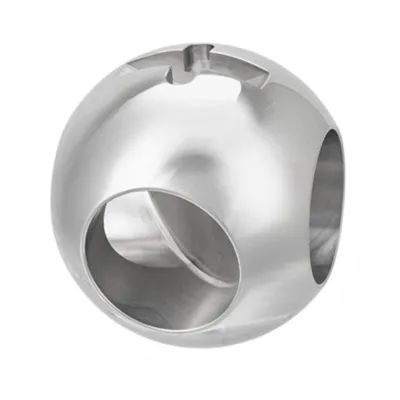
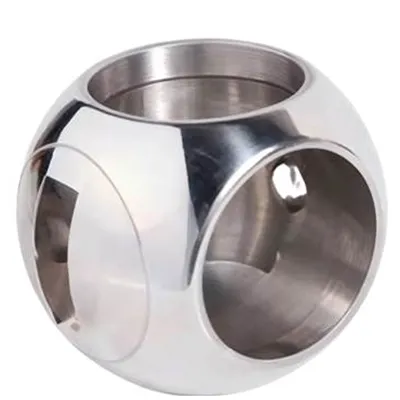
F-Port valve balls are essential components in various industrial applications, known for their unique design and functionality. As an F-Port valve ball supplier, I have had the privilege of working closely with these components and understanding their diverse types and applications. In this blog, I will explore the different types of F-Port valve balls, their characteristics, and their significance in the industrial world.
Understanding F-Port Valve Balls
F-Port valve balls are a type of ball valve component designed with an "F" shaped port. This unique port design allows for specific flow control characteristics, making them suitable for a wide range of applications. The F-Port design provides a more precise and predictable flow path compared to other port designs, such as the standard round port.
Types of F-Port Valve Balls
1. Standard F-Port Valve Balls
The standard F-Port valve ball is the most common type. It features a well-defined "F" shaped port that offers a balanced flow control. These valve balls are typically used in applications where a moderate flow rate needs to be regulated. They are suitable for both liquid and gas applications and are commonly found in industrial pipelines, chemical processing plants, and water treatment facilities.
The standard F-Port valve ball provides a good balance between flow capacity and flow control. The shape of the port allows for a smooth and consistent flow, reducing the risk of turbulence and pressure drop. This makes it an ideal choice for applications where stable flow conditions are required.
2. Modified F-Port Valve Balls
Modified F-Port valve balls are designed to meet specific application requirements. These valve balls may have variations in the shape, size, or angle of the "F" port. For example, some modified F-Port valve balls may have a wider or narrower port opening to adjust the flow rate. Others may have a different angle of the port to optimize the flow pattern.
Modified F-Port valve balls are often used in applications where precise flow control is critical. They can be customized to meet the unique needs of a particular process, such as in high-pressure or high-temperature applications. These valve balls are commonly used in the oil and gas industry, power generation, and aerospace applications.
3. High-Performance F-Port Valve Balls
High-performance F-Port valve balls are designed for applications that require exceptional flow control and durability. These valve balls are typically made from high-quality materials, such as stainless steel or ceramic, to withstand harsh operating conditions. They are engineered to provide a tight seal and low friction, ensuring reliable performance over a long service life.


High-performance F-Port valve balls are commonly used in critical applications, such as in the chemical and pharmaceutical industries. They are designed to handle high pressures, high temperatures, and corrosive fluids. These valve balls are also used in applications where a high degree of accuracy and repeatability is required, such as in laboratory equipment and precision manufacturing processes.
Comparison with Other Port Types
When considering F-Port valve balls, it is important to compare them with other port types, such as X-Port Valve Ball and V-Port Valve Ball.
- X-Port Valve Balls: X-Port valve balls have an "X" shaped port, which provides a different flow pattern compared to F-Port valve balls. X-Port valve balls are often used in applications where a more complex flow control is required, such as in multi-way valve systems.
- V-Port Valve Balls: V-Port valve balls have a "V" shaped port, which offers a linear flow characteristic. V-Port valve balls are commonly used in applications where a proportional flow control is needed, such as in throttling applications.
Each port type has its own advantages and disadvantages, and the choice of port type depends on the specific application requirements. F-Port valve balls are known for their balanced flow control and are suitable for a wide range of applications.
Applications of F-Port Valve Balls
F-Port valve balls are used in a variety of industries and applications, including:
- Chemical Processing: F-Port valve balls are used in chemical processing plants to control the flow of various chemicals. They are designed to withstand the corrosive nature of chemicals and provide reliable flow control.
- Water Treatment: In water treatment facilities, F-Port valve balls are used to regulate the flow of water and chemicals. They help to ensure the proper treatment of water and prevent the contamination of the water supply.
- Oil and Gas Industry: F-Port valve balls are used in the oil and gas industry to control the flow of oil, gas, and other fluids. They are designed to withstand high pressures and temperatures and provide reliable performance in harsh operating conditions.
- Power Generation: In power generation plants, F-Port valve balls are used to control the flow of steam, water, and other fluids. They help to ensure the efficient operation of the power generation process.
Advantages of F-Port Valve Balls
F-Port valve balls offer several advantages over other types of valve balls, including:
- Precise Flow Control: The "F" shaped port design provides a more precise and predictable flow control compared to other port designs. This allows for better regulation of the flow rate and pressure.
- Low Pressure Drop: The smooth and consistent flow path of the F-Port valve ball reduces the pressure drop across the valve, resulting in energy savings and improved system efficiency.
- Tight Seal: F-Port valve balls are designed to provide a tight seal, preventing leakage and ensuring reliable performance.
- Durability: F-Port valve balls are typically made from high-quality materials, such as stainless steel or ceramic, which makes them durable and resistant to wear and corrosion.
Conclusion
F-Port valve balls are an important component in various industrial applications. Their unique "F" shaped port design provides precise flow control, low pressure drop, and a tight seal. As an F-Port valve ball supplier, I understand the importance of providing high-quality products that meet the specific needs of our customers.
If you are in need of F-Port valve balls for your industrial application, I encourage you to contact us for more information. Our team of experts can help you select the right type of F-Port valve ball for your specific requirements and provide you with the best possible solution.
References
- "Valve Handbook: Selection, Installation, and Maintenance" by Valve Manufacturers Association of America
- "Ball Valves: Design, Selection, and Application" by John F. Campbell