An assembly line at an industrial valve maker rejects four percent of finished ball valves at leak test. The investigation takes three weeks. The balls measure inside tolerance. The seats measure inside tolerance. Both suppliers are certified, both pass incoming inspection, and both are, technically, correct.
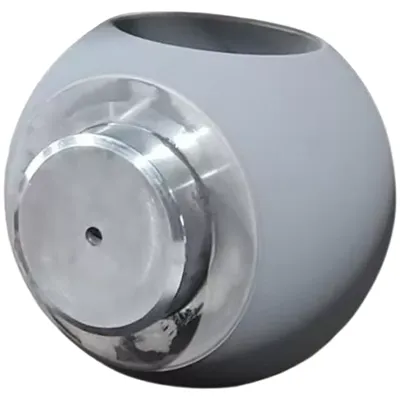
The problem is not either part. It is the pair. A valve ball and its seat are lapped against each other to form a sealing interface, and the quality of that interface depends on how the two surfaces mate - not on whether each one independently met a drawing. This is the least discussed and most frequently misdiagnosed problem in ball valve assembly, and it is the reason Jigong valve balls are supplied with a defined sphericity and surface texture that a seat maker can lap against predictably.
This article explains what "matched" actually means, the three ways suppliers handle pairing, the interchangeability trade-off that comes with matched sets, and what to write on a purchase order so that pairing stops being an assembly-line surprise.

Two parts can each be in tolerance and still form a leaking pair.
A Ball and a Seat Are a System, Not Two Parts
In a soft-seated ball valve, sealing relies on the seat material deforming against the ball surface under preload and line pressure. In a metal-seated valve, it relies on two hard surfaces conforming closely enough that leakage stays within the acceptance criterion. In both cases, what seals is the interface, and the interface is created by two surfaces meeting.
Three geometric properties of the ball determine whether that meeting is good:
- Sphericity - how closely the ball approximates a true sphere. A ball that is out of round presents a varying radius to the seat as it rotates. The seat must then conform to a moving target, and leakage appears at specific rotational positions rather than uniformly.
- Surface texture - not just Ra, but the direction and character of the finish. A circumferentially ground surface and a randomly lapped surface with identical Ra behave differently against a seat, because the microscopic contact pattern differs.
- Hardness consistency - a ball that is harder at the poles than at the sealing band will lap differently across its own surface, producing a contact pattern that is tight in one zone and open in another.
When a valve leaks at test, the natural response is to blame the seat, because the seat is the compliant part and the ball is the expensive one. In practice, an out-of-round ball is often the root cause, and it is invisible to a diameter check.
What "Matched" Actually Means
Matching is not a vague quality claim. It has three measurable components.
1. Contact pattern
When a seat is lapped against a ball, the contact area shows as a band. Its width, continuity and position tell you whether the pair is sealing on a full circle or on a few high points. A broken or narrow contact band is the earliest visible sign of a pairing problem, and it is visible before any leak test.
2. Lapping allowance
Lapping removes material. If the ball is at the top of its tolerance band and the seat is at the bottom, the pair may have no allowance left to develop a proper contact band. This is why tolerance stack between ball and seat matters more than either tolerance individually - and why a supplier who ships only the middle of the band is more valuable than one who ships anywhere inside it.
3. Surface conformity under pressure
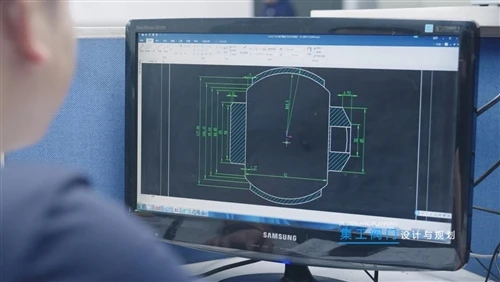
A pair that seals at low pressure can leak at rated pressure if the seat deflects and the ball surface cannot follow. Conformity is a function of sphericity and seat stiffness together, which means the ball specification has to be set with knowledge of the seat design - not in isolation.

The contact band is the earliest visible evidence of whether a ball and seat will seal.
Three Ways Suppliers Handle Pairing
| Approach | How it works | Consequence | Where it fails |
|---|---|---|---|
| Random assembly | Balls and seats drawn from stock independently; the pair is whatever happens to meet on the line | Cheapest; field-replaceable parts remain interchangeable | Rejection rate depends on the tails of two distributions; the worst pairs fail at test |
| Selective matching | Balls and seats are measured and grouped, then paired within matched size bands | Good yield without changing either part's process; adds measurement and inventory complexity | Requires both suppliers to measure the same way; a gauge mismatch destroys the bands |
| Matched lapping sets | Ball and seat are lapped together as a set and shipped as a numbered pair | Best sealing performance; lowest leak rate at assembly | Sets are not field-interchangeable - replacing a ball alone voids the match |
The third option is the best answer to a leak problem and the worst answer to a maintenance problem. That trade-off is rarely discussed at the quotation stage, and it surfaces years later in a service complaint: a customer replaces a worn ball, keeps the seat, and the valve leaks - because the pair was never interchangeable in the first place.
The Interchangeability Trade-Off
Matched sets buy sealing performance with serviceability. Three ways to manage that trade-off:
- Ship matched sets as service spares. If the original valve used a matched pair, the spare should be a matched pair. Supplying a loose ball as a spare is a warranty claim waiting to happen.
- Mark the set. A pair number etched on both parts costs almost nothing and prevents mismatched reassembly in the field.
- Reserve matched lapping for the difficult cases. Metal-seated, high-pressure, low-emission and cryogenic service justify it. Standard soft-seated water service usually does not, and paying for it there is waste.
What This Means for a Ball Supplier's Specification
The seat maker cannot control the ball side of the pair, so the ball specification carries most of the burden. In programs we supply to industrial valve manufacturers - including ball valve lines for oil and gas service at Fangzheng Valve Group (方正阀门集团, stock code 920082), a Wenzhou-based valve maker listed on the Beijing Stock Exchange - the specification conversation almost always comes back to three numbers:
| Characteristic | Why it decides the pair | What to put on the PO |
|---|---|---|
| Sphericity | Sets how much the seat has to conform; the dominant cause of position-dependent leakage | Numeric value plus measurement method and sampling plan |
| Surface texture | Determines how quickly lapping develops a full contact band | Ra with cutoff and direction; state whether lapped or ground |
| Hardness distribution | Decides whether the ball laps uniformly across its own surface | Range plus locations measured, not a single average |
One further clause is worth adding: a statement that the supplier will hold the mean at the centre of the tolerance band rather than anywhere within it. This single requirement reduces the pairing problem more than tightening the tolerance itself, because it removes the worst combinations from the tails of the distribution.

Sphericity is the ball-side variable that decides how much the seat has to conform.
How Jigong Approaches Matched Lapping
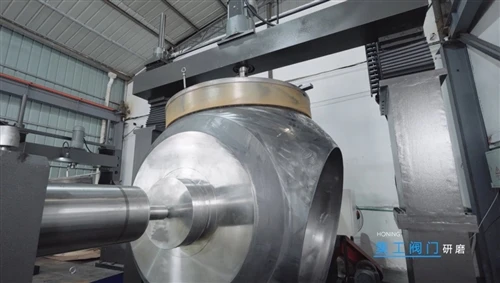
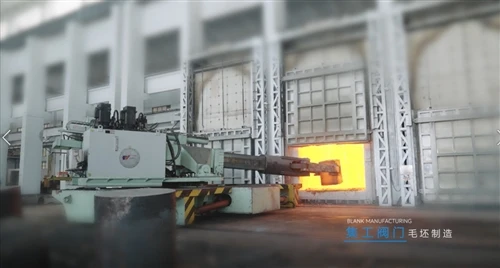
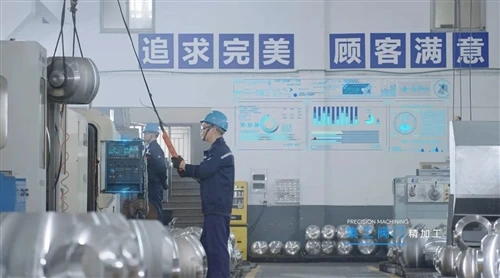
Jigong valve balls are made at our plant in Wenzhou - 4,000 square meters, a team of more than 70, over 200 machines, dimensional capability to 0.001 mm, ISO 9001 certified. Machining and grinding, electroless nickel plating, hard chrome plating, tungsten carbide HVOF and Stellite overlay welding are all in-house, which matters here for a specific reason: when the ball surface and the coating are produced in the same building, the surface texture that the seat has to lap against is a controlled variable rather than an incoming surprise.
In practice this means three things for a pairing program:
- Balls can be supplied at a defined point in the band - not "anywhere inside" - so the seat maker's lapping allowance is predictable from lot to lot.
- Surface texture is specified with method, not just a number, so the lapping behaviour of a Jigong valve ball is consistent across production runs.
- Matched sets can be lapped and numbered on request, with the pair number marked on both components so field reassembly cannot silently break the match.
We would rather have this conversation before the first order than after the first rejected lot at leak test. It is much cheaper to specify a contact band than to explain a four percent rejection rate.
Frequently Asked Questions
If both parts are in tolerance, why does the pair leak?
Because tolerance is a window, not a point. A ball at the high end of its sphericity limit and a seat at the low end of its conformity limit can each conform to their drawings and still form a poor interface. Pairing problems live in the combination, which is why incoming inspection of each part separately does not catch them.
Should we always buy matched sets?
No. Matched sets are justified where the sealing requirement is demanding - metal-seated, high pressure, low emission, cryogenic - and where service replacement can be handled as a set. For standard soft-seated valves, a well-centred ball with controlled sphericity and consistent surface texture is usually the better economics, because it preserves field interchangeability.
How do we know a ball's sphericity without a CMM?
You can infer it, but not measure it. A three-point or V-block check reveals out-of-roundness on a specific axis, and a skilled inspector can detect problems. It does not give a sphericity value. If the specification has a numeric sphericity callout, the verification method has to be capable of measuring it - otherwise the callout is decorative.
Does coating affect pairing?
Significantly. A coating changes both the surface texture and the local hardness, and coating thickness varies across a sphere - typically thicker at the poles than at the sealing band. That variation changes the lapping behaviour precisely in the zone that matters, which is why thickness distribution, not average thickness, should be specified.
Can we lap a ball ourselves after receipt?
You can, but it changes the ball you bought. Lapping removes material and can alter sphericity if the process is not controlled, and it will remove or thin a coating at the contact band. If you intend to lap in-house, tell the supplier at the quotation stage so the ball can be supplied with the correct allowance - and so the coating specification accounts for the material that will be removed.

Lapping allowance has to be designed into the pair, not discovered during assembly.
Fangzheng Valve Group: What a Demanding Program Requires
Fangzheng Valve Group was founded in 1992 and now operates three manufacturing bases across Wenzhou and Shanghai, serving oil and gas, coal chemical and power generation applications with products that include cryogenic valves and wellhead equipment. The company holds ISO 9001, ISO 14001 and ISO 45001 certification along with TS, API, ATEX and CE/PED product approvals, and has been certified as a qualified supplier by Shell, Chevron, BP, ADNOC, PDO and PETRONAS.
A customer profile like that sets the bar for component supply in a specific way. When your own valves are audited by international oil companies, the ball inside them has to be documentable, traceable and consistent - not merely compliant on the day of inspection. That is the standard Jigong valve balls are produced against: material traceable to heat number, dimensional data from coordinate measuring equipment rather than handheld gauges, and a surface specification that a seat maker can lap against predictably.

Matched sets should ship as sets, with the pair number marked on both parts.
Specify the Pair, Not Just the Part
Send us the ball drawing together with the seat design and the leak acceptance criterion. We will tell you what sphericity and surface texture the ball needs for that pair, whether matched lapping is worth the cost in your application, and what the interchangeability consequences will be in the field. That is a more useful conversation than a price for a part nobody has checked against its partner.
Request a ball-and-seat pairing review
Zhejiang Jigong Valve Co., Ltd. - Jigong valve balls for industrial valve makers and OEM programs. ball-china.com