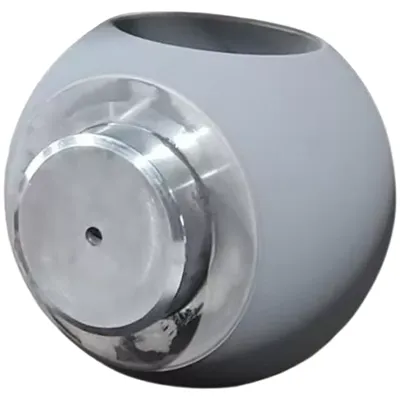
The sample passed everything. Dimensional layout was inside tolerance, sphericity measured 0.004 mm, hardness survey was uniform, coating thickness was on target, and the leak test at 1.5 times rated pressure held for the full duration. The valve manufacturer approved the source and issued a purchase order for 200 pieces per month, rising to 2,000.
The first 200-piece lot had a 6.5 percent rejection rate at final assembly. The second lot was worse. Nothing had changed in the drawing, the material certificate was identical, and the supplier insisted - truthfully - that the process was the same. What had changed was that the process was no longer being run by the person who made the sample, on the machine that was kept free for it, with the attention that a single piece attracts.
This gap between an approved sample and a stable serial supply is the most common failure point in valve ball sourcing, and it is almost entirely predictable. This article sets out why a first article is weak evidence, what has to be frozen before volume starts, what actually changes at 2x, 5x and 10x, and how to read a supplier's capacity claim without being an expert in grinding.

The sample proves the process can work. It does not prove the process will repeat.
Why a First Article Is Not Evidence of Serial Capability
A first article is made under conditions that will never exist again. Four of them matter.
1. The process is tuned for one piece, not for a run
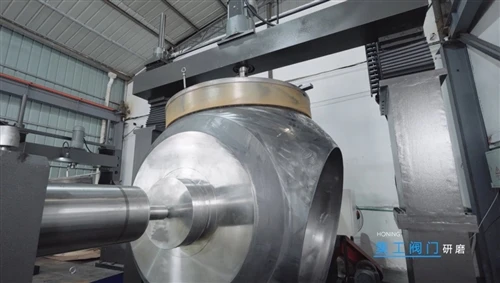
Grinding a single ball to 0.004 mm sphericity allows the operator to adjust, measure, adjust again. In a production run, the same operator is managing wheel wear, coolant condition, thermal drift and a queue of parts. The process that produced the sample was a tuning exercise; the process that produces the lot is a control exercise.
2. The sample is made by the best person available
Ask who made the sample. It is usually the most experienced machinist or the process engineer, and it is rarely the person who will run the order. This is not deception - it is how sample work is normally assigned. It does mean the sample measures the shop's ceiling rather than its floor.
3. Measurement is more careful, and sometimes better instrumented
First articles are often measured on the best available equipment, sometimes at a partner lab, sometimes by the quality manager personally. Production lots are measured by whoever is on shift, on whatever gauge is at hand. The parts may be identical; the measurement of them is not.
4. Material comes from one lot, often a hand-picked one
Sample material is frequently drawn from stock the shop trusts. Volume production draws from whatever the purchasing department bought, which may be a different heat with different machinability and different response to polishing and plating.
The Four Things to Freeze Before Volume Starts
Scale-up is not a matter of trying harder. It is a matter of converting knowledge held by people into parameters held by the process. Four things have to be frozen, in writing, before the first production lot.
| What to freeze | What it contains | What happens if it is not frozen |
|---|---|---|
| Process parameters | Grinding wheel specification and dressing interval, feed and speed, lapping compound and plate condition, plating current density and bath chemistry limits, HVOF spray distance and feed rate | Each operator runs a slightly different process; the spread appears as lot-to-lot variation with no single cause to correct |
| Gauges and fixtures | Which instrument measures which characteristic, calibration status, gauge R&R results, fixture identification | Two shifts report different numbers for the same parts; disputes become unresolvable |
| Material rules | Approved mills, heat traceability, incoming inspection, rules for introducing a new heat | A cheaper heat enters mid-program and surface finish or coating adhesion shifts without warning |
| Acceptance criteria | Written limits per characteristic, sampling frequency, reaction plan when a limit is breached | Acceptance drifts toward "looks like the sample", which is judgement, not a specification |
The test of whether these are genuinely frozen is simple: can the supplier produce the documents on request, and do they name specific values rather than ranges of intention? "Grinding parameters per standard practice" is not a frozen parameter. "Wheel specification X, dressed every 40 pieces, infeed Y, verified by roundness check every 10 pieces" is.

Scale-up is the conversion of knowledge held by people into parameters held by the process.
The Ramp Curve: What Changes at 2x, 5x and 10x
Volume does not scale linearly in difficulty. Different constraints bind at different multiples, and buyers who understand which one is about to bind can ask the right question before the problem arrives.
| Volume step | Constraint that starts to bind | Typical symptom | What to ask |
|---|---|---|---|
| 2x | Operator consistency; the second shift appears | Slight increase in spread; a few out-of-round parts traced to one shift | Who runs the second shift, and how were they trained? |
| 5x | Machine capacity and tooling life; plating line throughput | Lead time extends before quality drops; overtime becomes structural | Which machine is the bottleneck, and what is its measured capacity for this part? |
| 10x | Material supply, subcontractor capacity, inspection throughput | Material lead time dominates; outsourced steps become the schedule | Which processes are subcontracted, and what is their capacity for you? |
Note the pattern: quality problems appear early, capacity problems appear in the middle, and material problems appear last and are the hardest to fix. A supplier that has genuinely run high volumes will describe this sequence without prompting, because it has lived it.
The Capacity Arithmetic You Should Ask For
"We can make 3,000 a month" is not information. Capacity for a specific part number is arithmetic, and it is arithmetic the supplier should be able to show you. A worked example:
Grinding cycle time: 25 minutes per ball, including load and in-process check
Available time: 2 shifts × 7.5 h × 22 days = 330 h/month per spindle
Theoretical output: 330 h ÷ 0.417 h = 792 pieces/month per spindle
At 75% OEE (planned downtime, changeovers, dressing, minor stops): 594 pieces/month per spindle
To reach 2,000 pieces/month: 4 spindles, plus a first-pass yield above 96% to avoid rework consuming the margin
This is the conversation worth having. Ask for cycle time per critical operation, the number of machines that can run the part, the OEE they actually achieve on comparable work, and their first-pass yield. A supplier who answers with these numbers has a plan. A supplier who answers with a total figure has a hope.
Two further questions expose the weak points quickly. First: what else runs on those machines? A spindle that is nominally available may be committed to another customer's program, and your order will queue behind it. Second: is any step subcontracted? If coating or heat treatment is outsourced, your capacity is somebody else's capacity, and you have no visibility into their queue.

Capacity is arithmetic per part number, not a total figure on a capability brochure.
Process Control That Survives Volume
Once volume starts, the question stops being "can you make it" and becomes "how do you know you are still making it". Five controls carry most of the weight for valve balls:
- Sphericity trend monitoring, not pass/fail. Plot the measurement over the run. A drifting trend is visible long before a part exceeds the limit, and it tells you when to dress the wheel.
- Wheel wear compensation on a defined interval. The single largest cause of gradual roundness drift. The interval must be a number, and it must be shortened when the trend shows drift.
- Coating bath chemistry at fixed intervals. Plating thickness and adhesion depend on bath composition, temperature and current density. A bath that is monitored only when parts look wrong is not controlled.
- Thickness mapping at the sealing band. Not a single reading at a convenient point. The distribution across the sphere is what determines wear life.
- A defined reaction plan. What happens when a limit is breached - who stops the line, what is quarantined, how the affected lots are identified. A control chart without a reaction plan is decoration.
A Cpk target is a useful summary, but only if it is computed on the characteristic that matters. Cpk on diameter is easy to achieve and largely irrelevant; Cpk on sphericity at the sealing band is the number that predicts leakage. Ask which characteristic the reported Cpk refers to.
What to Write Into a Capacity Commitment
A capacity commitment is only useful if it survives contact with a busy quarter. Four elements make it enforceable:
- A stated monthly quantity per part number, not a total across the product range. Aggregate capacity is not capacity for your part.
- A reservation mechanism. How the quantity is held, for how long, and what notice is required before the supplier can reallocate it.
- A ramp schedule if volume grows. If you commit to 2,000 and expect 4,000 in year two, the trigger, lead time and investment responsibility should be written down now, while both parties are still friendly.
- A remedy for shortfall. Not necessarily a penalty - priority allocation, expedited freight at the supplier's cost, or a right to source elsewhere without losing the tooling.

Serial capability is a control system, not a demonstration of skill.
What Scale-Up Looks Like Here
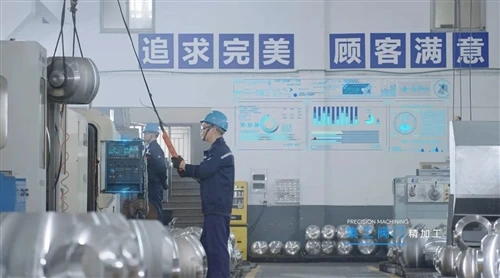
Our plant in Wenzhou runs 4,000 square meters with a team of more than 70 and over 200 machines, working to 0.001 mm, certified to ISO 9001. The reason scale-up is a controllable problem rather than an experiment is structural: machining and grinding, electroless nickel plating, hard chrome plating, tungsten carbide HVOF and Stellite overlay welding are all in-house, so the queue that matters is our own queue. Service temperature range covers -196°C to 500°C depending on material and coating selection, and material is traceable to heat number.
We quote cycle time, machine allocation, first-pass yield and OEE assumptions with the quotation, because a buyer who understands where the bottleneck is can plan around it - and a buyer who discovers it during a ramp has already lost the quarter.
Frequently Asked Questions
How many pieces should a pilot lot contain?
Enough to expose the second shift and a tool wear cycle. For most valve ball part numbers that means 100 to 300 pieces - small enough to be affordable, large enough to include at least one wheel dressing interval and one changeover. A 10-piece pilot proves almost nothing about serial behavior.
Should we accept a higher price for a supplier with more capacity?
Often yes, if the capacity is real and reserved. The cost of a ramp failure - expedited freight, line stoppage, customer escalation - usually exceeds a few percent of unit price. What should not be accepted is a higher price for a capacity claim that has not been backed by arithmetic.
Our volumes are small. Does any of this apply?
The freezing discipline applies at any volume, because it is what makes a second order match the first. The capacity arithmetic matters less. For low volumes, the more useful question is whether the supplier's process is documented well enough that the next run, possibly months later, reproduces the first.
What is a reasonable first-pass yield for valve balls?
It depends heavily on the specification - a tight-sphericity coated ball in a difficult material will be lower than a standard soft-seated part. What matters is that the supplier knows its number for your part and can explain the main causes of loss. A supplier who claims 100 percent first-pass yield on a demanding specification is either measuring loosely or not measuring.
How do we detect a ramp problem early?
Measure the first production lot more thoroughly than the drawing requires, and compare the distribution against the sample rather than against the limit. A shift in the mean, or a wider spread, appears before any part is out of specification. That comparison is the earliest warning available, and it costs one inspection shift.

The second order is the real test of a supplier, not the first sample.
Plan the Ramp Before the First Order
Send us the part number, the specification and your volume forecast for the next two years - including the ramp, not just the steady state. We will return the cycle time per critical operation, the machines allocated, the first-pass yield we expect, and the volume at which we would need to add capacity. If the answer is that we cannot support your ramp, you will hear it before you place the order rather than after.
Discuss a serial supply program
Zhejiang Jigong Valve Co., Ltd. - valve ball manufacturing for industrial valve makers and OEM projects.