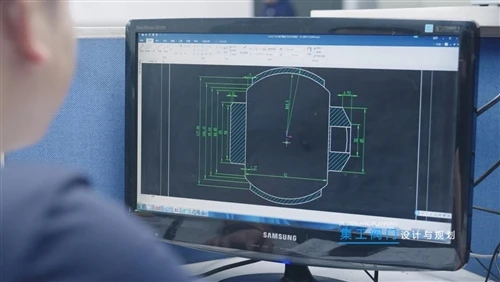
An orbit ball valve uses a special mechanical movement that lifts the ball away from the seat before it rotates, and re-seats it against the seat during closing.
This tilt-and-turn motion helps to reduce friction on the sealing surfaces during opening and closing.
Unlike conventional floating ball valves and trunnion-mounted ball valves, an orbit ball valve relies on a mechanical mechanism to coordinate the movement of the ball and achieve reliable sealing.
For valve manufacturers, this places specific requirements on the manufacturing quality of orbit ball components.
From material selection and dimensional accuracy to surface treatment and component fit, every manufacturing detail needs to be considered against the valve design.
So how exactly is an orbit ball manufactured? And what should industrial valve manufacturers look at when selecting a supplier for custom orbit ball machining?
01 | Understanding the Ball Structure of an Orbit Ball Valve
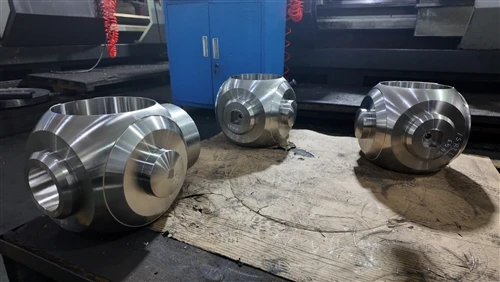
An orbit ball is a precision component used specifically in orbit ball valves.
Its working principle depends on a cam or guide mechanism integrated into the valve assembly.
On opening, the ball first moves off the seat and then rotates approximately 90°; on closing, the ball rotates into position and is then pressed back against the seat by mechanical action.
This movement reduces sliding contact between the ball and the seat during opening and closing.
The main functional requirements of an orbit ball include:
• Accurate spherical geometry
• Correct bore diameter and positional accuracy
• A precise stem connection or mating structure
• Compatibility with the valve cam and guide mechanism
• Surface quality that meets the requirements of the specified sealing structure
It should be noted that orbit ball valve designs differ, and the specific geometry and mechanical interface of the ball will also differ accordingly.
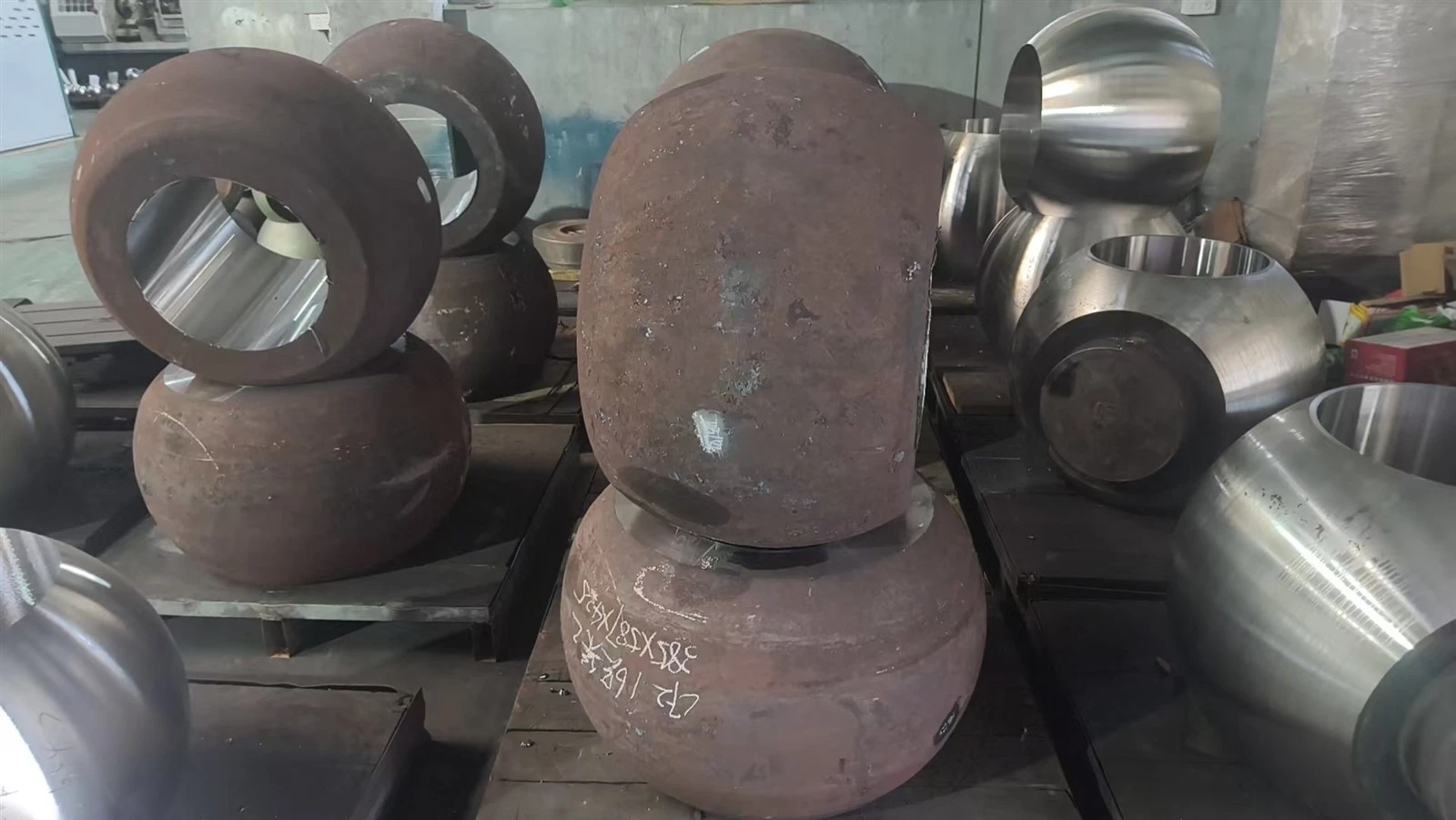
An orbit ball seen from several angles, alongside the drawing that defines its structure.
02 | Material Selection: Matching the Ball Material to the Actual Service Condition
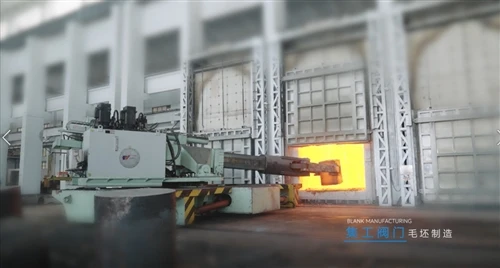
Material selection is one of the primary considerations in custom orbit ball manufacturing.
Different industrial applications involve different working temperatures, pressures, media and corrosive environments.
A material suited to one service condition is not necessarily suited to another.
Common materials used for industrial valve balls include:
| Material | Main characteristics |
|---|---|
| A105 | Carbon steel, suitable for general industrial applications |
| F304 / F316 | Stainless steel with corrosion resistance |
| F51 / F53 | Duplex and super duplex stainless steel |
| 17-4PH | Precipitation hardening stainless steel |
| Monel | Nickel-copper alloy for certain corrosive environments |
| Inconel 625 | Nickel-base alloy for severe corrosive and temperature conditions |
The final material selection needs to take the medium, working temperature, pressure, corrosion requirements and applicable material standards into account together.
For a custom orbit ball, the machining characteristics of the material and its compatibility with the specified surface treatment process also need to be considered.

Material samples and finished balls, labelled with verified grades.
03 | Precision Machining: Why Dimensional Accuracy Matters
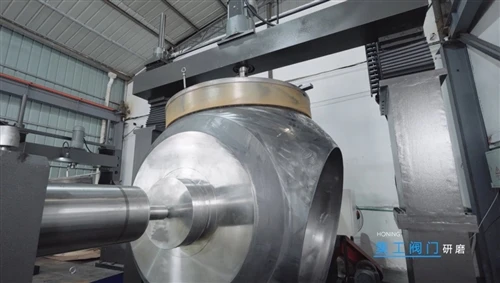
Precision machining is an important stage in industrial valve ball manufacturing.
An orbit ball does not work as an isolated component. It has to work together with the stem, the guide mechanism and the seat.
Machining errors on critical dimensions can therefore affect component assembly, movement and sealing performance.
The main machining requirements are as follows.
3.1 Spherical geometry accuracy
The spherical surface must meet the specified dimensional and geometric tolerance requirements.
Roundness, surface quality and dimensional consistency are important factors in ensuring that the ball and seat contact as the design intends.
3.2 Bore and positional accuracy
The flow bore and related datum features on the ball need to be machined in accordance with the engineering drawing.
If position or alignment accuracy does not meet requirements, assembly and the fit between the ball and the movement mechanism may be affected.
3.3 Stem connection and mechanical interface
Depending on the valve design, the ball may have a special connection structure or mechanical interface.
These structures must be machined to the specified geometry to ensure they match the valve assembly.
3.4 Surface finish
The spherical surface and sealing-related areas need appropriate finish machining according to the design requirements.
Suitable surface quality helps to achieve a stable contact condition between the ball and the seat.
The goal of orbit ball machining is not simply to produce a sphere, but to produce a precision component that meets the technical requirements of the entire valve assembly.

CNC machining of an orbit ball, with in-process inspection of the workpiece.
04 | Surface Treatment: Improving Wear Resistance and Surface Quality
Depending on the specific application, industrial valve balls may require additional surface treatment.
The purpose is to improve surface hardness, wear resistance, corrosion resistance or resistance to abrasive wear.
Common surface treatment processes include:
| Code | English name | Main function |
|---|---|---|
| ENP | Electroless nickel plating | Corrosion resistance, uniform coating |
| TCC | Tungsten carbide coating | Abrasive wear resistance, erosion resistance |
| CRC | Chromium carbide coating | Wear resistance, erosion resistance |
| STL | Stellite alloy overlay | High-temperature wear resistance, anti-galling |
| HCR | Hard chrome plating | Increased surface hardness and wear resistance |
| Ni55 / Ni60 | Nickel-base alloy treatment | Improved surface hardness and wear resistance |
Different surface treatment processes suit different working environments.
A tungsten carbide coating, for example, can be used for service conditions containing abrasive particles, while nickel-base alloy treatment can be used in scenarios with specific wear and corrosion resistance requirements.
But surface treatment cannot be judged on hardness alone.
Coating thickness, bond quality, substrate compatibility and the finishing requirements after treatment also need to be considered.
For an orbit ball, the final surface must meet the fit requirements of the specified ball and seat sealing structure.
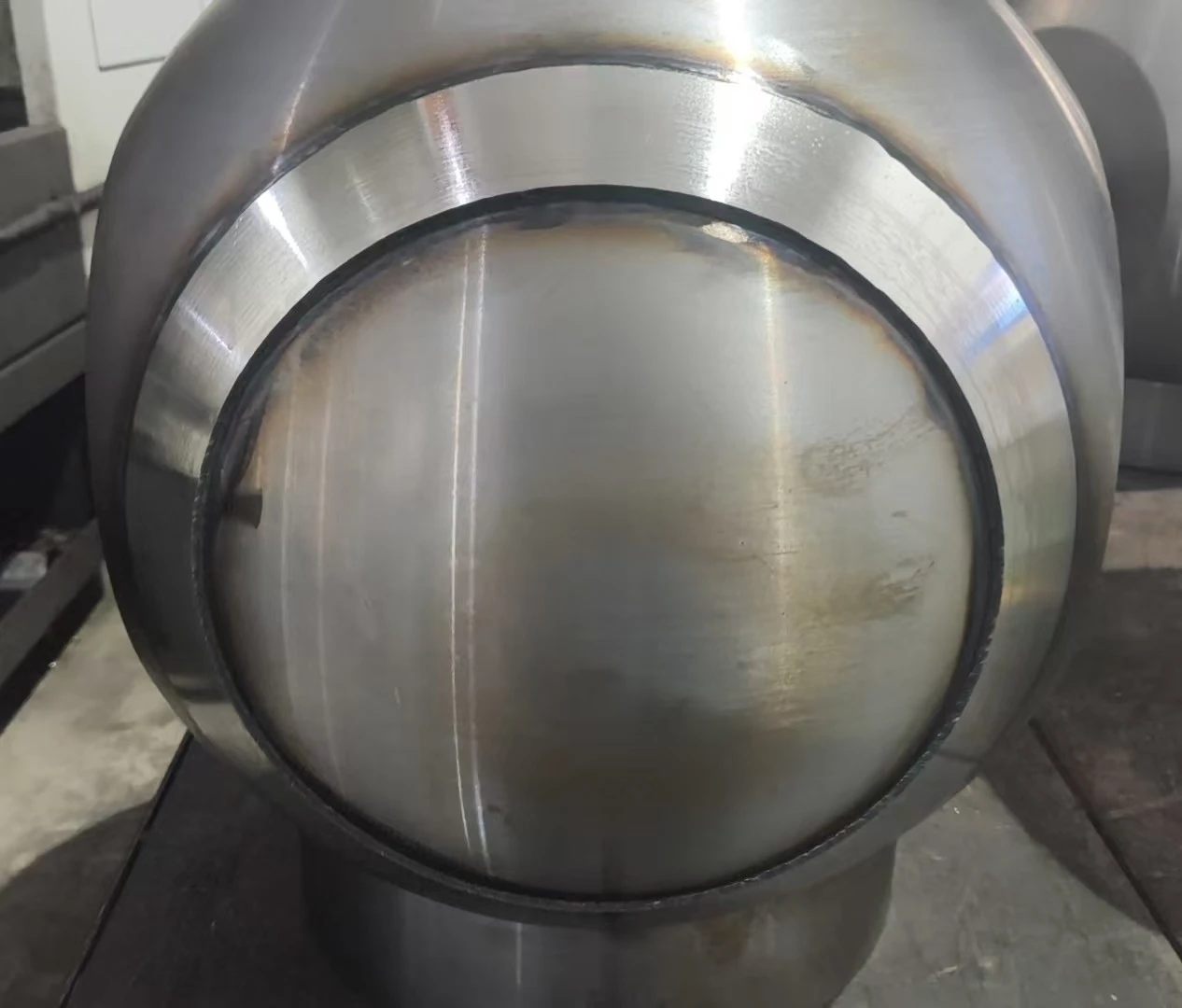
Surface-treated samples and finished balls, labelled with the process applied.
05 | Dimensional Inspection and Quality Control
Manufacturing accuracy ultimately has to be verified by inspection.
For industrial valve ball manufacturers, dimensional inspection is not simply the last step in production - it is an important stage in ensuring the product meets the customer's technical drawing requirements.
Common inspection items include:
• Ball diameter and critical dimensions
• Roundness
• Coaxiality and positional accuracy
• Geometric tolerances
• Bore dimensions
• Surface condition and finish
• Coating thickness and surface quality, where applicable
Existing records at Zhejiang Jigong Valve show that the company's general valve ball manufacturing capability includes roundness controlled to 0.01 mm, with certain geometric tolerances controlled to 0.05 mm.
It should be noted that these figures reflect the general valve ball manufacturing capability recorded in the company's existing documentation. They do not mean that all orbit balls are produced to the same tolerances. The specific machining accuracy for an orbit ball needs to be confirmed against the actual engineering drawing and the customer's inspection requirements.

Coordinate measurement and dimensional inspection records for a production batch.
06 | What Capabilities Should You Evaluate When Buying Orbit Balls?
Selecting an orbit ball supplier should not come down to comparing quotations alone.
Industrial valve manufacturers also need to assess whether the supplier understands the functional requirements of the product, and whether it can machine to the valve assembly drawing.
Six areas are worth focusing on.
1. Engineering drawing comprehension
Can the supplier review the technical drawing and identify the critical dimensions, mating interfaces and machining requirements?
2. Material supply and machining capability
Can the supplier machine the required carbon steel, stainless steel, duplex stainless steel and nickel-base alloy materials?
3. Precision machining capability
Does the supplier have machining equipment and inspection methods capable of meeting the product's dimensional and tolerance requirements?
4. Surface treatment capability
Can the supplier match a suitable surface treatment solution to the actual working environment and technical specification?
5. Inspection and quality documentation
Can the supplier provide the dimensional inspection records, material certification and quality documentation required by the customer?
6. Production capacity and delivery capability
Can the supplier meet the required production quantity, delivery lead time and repeat order requirements?
A reliable valve ball supplier should be able to discuss these technical requirements fully with the customer before formal production begins.
07 | Jigong's Custom Valve Ball Manufacturing Capability
Zhejiang Jigong Valve Co., Ltd. entered the valve ball manufacturing field in 1991.
The company focuses on industrial valve balls and seat components, and provides supporting machining services to industrial valve manufacturers in China and overseas.
Its current products and manufacturing capability cover a range of valve ball structures, materials, machining requirements and surface treatment solutions.
The main manufacturing capabilities include:
• Roundness accuracy for general valve balls controlled to 0.01 mm
• Ball machining equipment in a range of specifications
• Eight sets of extra-large ball machining equipment
• Maximum machining size up to 64 inches
• Surface treatment solutions including ENP, TCC, CRC, Stellite and nickel-base alloys
These capabilities provide the manufacturing basis for Jigong to take on different types of custom industrial valve ball projects.
For an orbit ball project, the specific machining process, equipment suitability, tolerance requirements and production feasibility need to be evaluated against the customer's drawing before an order is formally confirmed.
Jigong matches the machining process to the technical requirements of each individual project, rather than applying a single solution to every product.
08 | Looking for a Custom Orbit Ball Manufacturer?
Choosing the right orbit ball supplier matters to industrial valve manufacturers who need consistent component quality and reliable assembly performance.
Orbit ball manufacturing requires the ball geometry, material, surface treatment, mechanical interface and the match with the overall valve design to be considered together.
If you are looking for a supplier of custom orbit balls or other industrial valve ball components, you are welcome to contact Zhejiang Jigong Valve.
To help us evaluate your requirement accurately, please provide:
• Product engineering drawing or 3D model
• Ball dimensions and tolerance requirements
• Material grade
• Surface treatment requirements
• Order quantity
• Inspection and quality documentation requirements
Our team can evaluate your technical specification and discuss a suitable manufacturing solution.
Zhejiang Jigong Valve Co., Ltd.
Custom manufacturing of industrial valve balls and valve seat components.
Contact us to discuss your next valve ball manufacturing project.