A valve ball that fails in service rarely fails alone. Internal leakage, surface pitting, coating delamination, and rising torque cascade into unscheduled downtime and safety exposure. For industrial buyers and valve manufacturers, most of these failures are preventable - provided the root cause is understood before the component is specified. This guide examines the most common valve ball failures, the mechanisms behind each one, and the engineering and sourcing practices that keep precision valve balls performing over a full service life.
Why Valve Ball Failures Cost More Than the Component
A valve ball is the highest-value precision component inside a ball valve. When it fails, the entire valve is compromised: the seat pair loses its sealing interface, the stem sees abnormal torque, and the actuator may stall. In pipeline and process service, the replacement cost of the ball is often the smallest part of the total loss - production interruption, media spillage, and maintenance labor usually dominate. This is why failure prevention has to start at the specification and manufacturing stage, not in the maintenance bay.
The failure modes below are the ones most frequently seen across oil and gas, chemical processing, water treatment, and power applications. Each follows the same structure: symptoms, root causes, and prevention measures that address the cause rather than the symptom.
The Most Common Valve Ball Failure Modes
Field data and failure analysis reports point to a small set of recurring failure modes that account for the large majority of premature valve ball replacements.
| Failure Mode | Typical Symptom | Primary Root Cause |
|---|---|---|
| Seal face leakage | Internal leak when closed; media passes the seat pair | Roundness deviation, surface roughness, seat erosion, throttling duty |
| Surface wear and scoring | Visible scratches on the ball surface; rising torque | Abrasive particles, hard inclusions, inadequate surface hardness |
| Corrosion and pitting | Discoloration, pits, crevice attack on the ball | Material/medium mismatch, chlorides, stagnant corrosive media |
| Coating failure | Flaking, blistering, or delamination of the coating layer | Poor pre-treatment, wrong coating selection, over-thickness |
| Dimensional deviation and torque rise | Sticking, uneven operation, actuator overload | Machining tolerance drift, thermal expansion, galling |
Failure 1: Seal Face Leakage
Symptoms. The valve passes media even fully closed; downstream pressure does not hold; seat inspection shows an uneven contact band. In severe cases, a crescent-shaped erosion pattern appears on the soft seat - the classic signature of throttling damage.
Root causes. Seal face leakage on a valve ball almost always traces back to geometry or duty:
- Roundness deviation: a ball that is not truly spherical cannot create a uniform line of contact with the seat. Even a few microns of lobing produce an intermittent seal that leaks under pressure.
- Insufficient surface finish: a rough surface increases friction and prevents the seat from conforming to the ball, leaving micro-channels for leakage.
- Throttling duty: a standard shut-off ball held partially open directs high-velocity flow onto a small area of the seat, eroding it through a wire-drawing effect - a leading cause of premature soft-seat failure.
- Seat material mismatch: virgin PTFE seats deform (cold flow) when the medium exceeds roughly 200°C or under high cycling loads, breaking the seal contact.
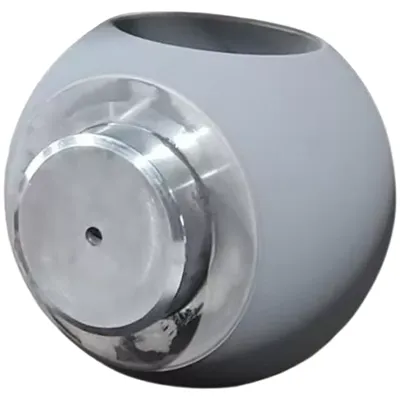
Prevention. Specify a valve ball with verified roundness (precision machining holds spherical deviation within 0.001 mm on critical diameters) and a mirror-polished surface suited to the seat material. Confirm the valve is a true shut-off design or a purpose-built control component such as a V-port ball - never throttle a standard ball valve. For high-temperature or high-cycle service, select reinforced seats (RPTFE, PEEK) or metal seats instead of virgin PTFE.
Failure 2: Surface Wear and Scoring
Symptoms. Circumferential scratches on the ball surface; the ball feels rough after disassembly; torque climbs as the damaged surface drags against the seat.
Root causes. Wear and scoring are driven by particles and by surface hardness:
- Abrasive media: sand, weld slag, scale, and other hard particles trapped between the ball and the seat act as lapping grit. A single sharp metal shaving can score a polished surface in one stroke.
- Insufficient hardness: an unhardened stainless steel surface wears faster in abrasive service than a coated or hardened surface.
- Missing upstream filtration: without a strainer or filter, construction debris and process solids reach the valve internals directly.
Prevention. Match surface treatment to the medium: hard chrome, electroless nickel (ENP), and tungsten carbide (HVOF) coatings are the standard options for abrasive and erosive service. Install Y-type strainers upstream of critical valves during commissioning and after maintenance. Ask the valve ball manufacturer for coating thickness and hardness verification data rather than assuming a standard coating is present.
Failure 3: Corrosion and Pitting
Symptoms. Discoloration, rust staining, pitting, or crevice corrosion on the ball surface; leakage follows once pits break through the sealing surface. Corrosion failures often appear within the first months of service - a sign that the failure began with material selection, not operation.
Root causes.
- Material/medium mismatch: standard 304 stainless steel is vulnerable to chloride attack. In seawater and chlorinated streams, 316/316L offers better resistance, while duplex (2205) and super duplex (2507) provide significantly higher pitting resistance combined with higher strength.
- Stagnant media: crevices and low-flow zones concentrate corrosive ions, accelerating localized attack.
- Cavitation: collapsing vapor bubbles in high-pressure-drop service erode the surface, creating pits that act as corrosion initiation sites.
Prevention. Select the ball material based on the full medium specification - temperature, chloride content, pH, and oxygen level - not just the generic "stainless" label. For aggressive chemical, marine, and offshore environments, duplex, super duplex, and nickel alloys (Inconel, Monel, Hastelloy) are available from specialty valve ball manufacturers. Verify material certificates and request PMI confirmation where critical.
Failure 4: Coating Failure and Delamination
Symptoms. Flaking, blistering, or peeling of the coating layer; exposed base metal corrodes beneath the damaged areas; torque and leakage performance degrade together.
Root causes. A coating is only as good as the surface it is applied to:
- Inadequate pre-treatment: residual oils, oxides, or an improper surface profile prevent mechanical bonding between coating and substrate.
- Wrong coating for the service: a coating chosen for hardness alone may lack corrosion resistance, or vice versa - for example, hard chrome offers wear resistance but has limited performance in strongly acidic media.
- Uncontrolled process parameters: over-thickness, excessive residual stress, or poor temperature control during application can crack or lift the coating under thermal cycling.
Prevention. Work with a valve ball supplier that documents its coating process end to end. A qualified manufacturer with dedicated surface treatment lines will provide coating thickness and hardness records and recommend the correct coating family - ENP for uniform corrosion protection, hard chrome for wear, tungsten carbide (HVOF) for severe abrasive and erosive duty, and Stellite overlay for high-temperature metal-seated applications. Process control is the difference between a ball that survives years and one that fails early.
Failure 5: Dimensional Deviation and Rising Operating Torque
Symptoms. The valve becomes increasingly hard to operate; the actuator trips on high torque; the ball appears to bind; in extreme cases the stem slot or drive features show deformation.
Root causes.
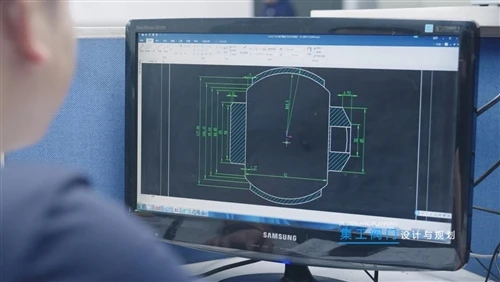
- Machining tolerance drift: if ball diameter, roundness, or the stem slot tolerance drifts outside the drawing, the interference with the seat changes and torque rises unpredictably.
- Thermal expansion and galling: in high-temperature service, the ball and seat materials expand at different rates; without proper clearances, the surfaces gall and seize.
- Debris accumulation: scale and process solids packed in the ball cavity can "cement" the ball in position when the valve is not cycled regularly.
Prevention. Demand dimensional verification at the manufacturing stage: critical diameters, roundness, and stem slot dimensions should be checked against the drawing with calibrated instruments, and results should accompany the shipment. For automated systems, size the actuator with the manufacturer's verified torque values. For dirty or scaling service, include a periodic cycling program - a 90° exercise once a month is often enough to prevent the ball from seizing.
How a Specialized Valve Ball Manufacturer Prevents These Failures
The most effective prevention happens before the ball leaves the factory. A specialized valve ball manufacturer controls the variables that create failures in the field:
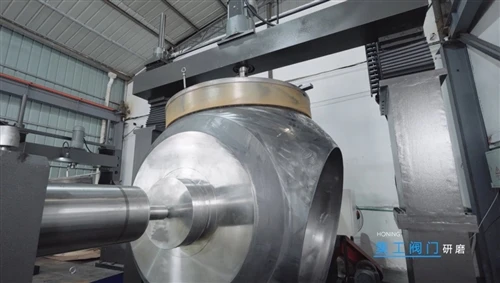
- Precision machining: CNC machining and grinding hold roundness and dimensional accuracy to 0.001 mm on critical features, eliminating the geometry defects behind seal face leakage.
- Controlled surface finishing: grinding and polishing deliver the surface roughness the seat material requires, keeping friction and torque predictable.
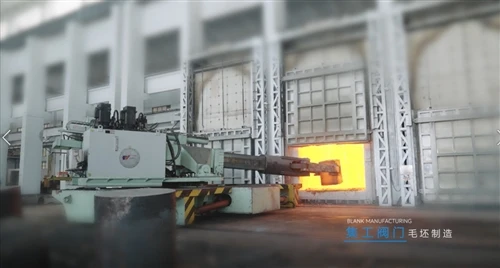
- Material range and certification: stainless steel, duplex, super duplex, and nickel alloys cover -196°C to 500°C, with material certificates and traceability for every batch.
- In-house coating capability: dedicated surface treatment for ENP, hard chrome, and tungsten carbide coatings with documented thickness and hardness control.
- Systematic inspection: dimensional inspection, hardness testing, surface roughness measurement, and material verification are part of a documented ISO 9001 quality management system - not optional extras.
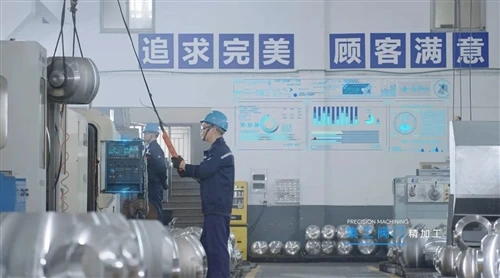
Zhejiang Jigong Valve Co., Ltd. operates a 4,000 m² factory with a team of more than 70 engineers and technicians and over 200 pieces of processing and inspection equipment, producing precision valve balls under ISO 9001 quality management. For buyers, this process control means fewer field failures and lower total cost of ownership.
Valve Ball Failure Prevention Checklist
Use this checklist when specifying, sourcing, and commissioning valve balls for critical service:
| Stage | Check Item |
|---|---|
| Specification | Material matches medium (temperature, chlorides, pH); seat material matches temperature and cycling; shut-off duty not used for throttling |
| Sourcing | Supplier documents roundness, roughness, and tolerances; coating thickness and hardness data; material certificates |
| Commissioning | Line flushed and strainers installed before the valve; pipe debris removed; actuator torque verified against valve data |
| Operation | Periodic cycling for dirty service; torque monitored for wear; leak testing per ISO 5208 |
Frequently Asked Questions
What is the most common cause of valve ball failure?
Seal face leakage is the most frequently reported failure, and its root causes are usually roundness deviation, surface roughness, seat material mismatch, or using a shut-off ball valve for throttling duty. Correct geometry at the manufacturing stage and the right seat material for temperature and cycling are the two highest-impact prevention measures.
Can a valve ball be repaired, or must it be replaced?
Minor surface damage can sometimes be re-polished, but re-polishing changes the ball diameter and may break the match with an existing seat pair. For critical service, replacement is almost always the safer choice.
Which valve ball material resists corrosion best?
It depends on the medium. 316/316L stainless steel suits chloride-containing service; duplex (2205) and super duplex (2507) provide higher pitting resistance and strength for marine and offshore duty; nickel alloys such as Inconel, Monel, and Hastelloy handle extreme chemical and high-temperature environments.
Why does my valve ball show pitting even though it is stainless steel?
Pitting is typically caused by chloride exposure combined with stagnant or low-flow conditions, or by cavitation in high-pressure-drop service. Verify that the selected grade (304 vs. 316 vs. duplex) matches the chloride concentration and temperature of your medium.
When should a coated valve ball be specified?
Specify a coated valve ball when the service is abrasive or erosive, when galling is a risk in high-temperature metal-to-metal contact, or when base material hardness is insufficient. Hard chrome and ENP cover general wear and corrosion needs, while tungsten carbide (HVOF) coatings suit severe abrasive duty.
Looking for a Valve Ball Manufacturer That Prevents Failures?
Zhejiang Jigong Valve Co., Ltd. specializes in precision valve balls designed and manufactured to hold up in demanding service - from floating and trunnion mounted designs to custom balls in stainless steel, duplex, and nickel alloys, with in-house coating capability and ISO 9001 quality management. A 4,000 m² factory, 70+ engineering and production staff, and 200+ processing and inspection machines stand behind every batch.
Send us your drawings or service conditions - material, medium, pressure, and temperature - and our team will confirm the specification and provide a detailed quotation.
Contact Us for a Quotation