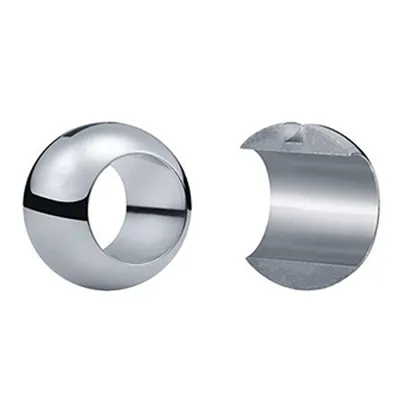
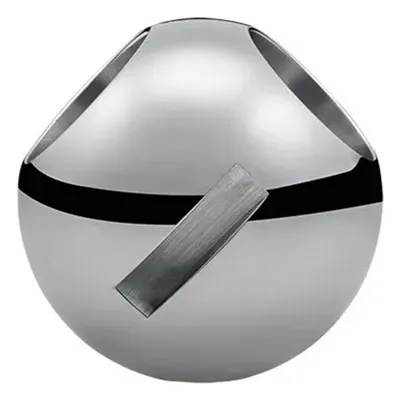
As a supplier of T - Port Valve Balls, I often encounter inquiries from customers about the rotational angle of T - Port Valve Balls. In this blog, I will delve into this topic, providing you with a comprehensive understanding of the rotational angle of T - Port Valve Balls, its significance, and how it relates to different applications.
Understanding T - Port Valve Balls
T - Port Valve Balls are a type of ball valve component that features a T - shaped port within the ball. This design allows for multiple flow paths, making them highly versatile in various fluid control systems. Unlike other types of valve balls such as L - Port Valve Ball, F - Port Valve Ball, and V - Port Valve Ball, T - Port Valve Balls offer unique flow control capabilities.
The Rotational Angle of T - Port Valve Balls
The rotational angle of a T - Port Valve Ball is a crucial parameter that determines the flow path and the degree of flow control. Typically, T - Port Valve Balls can rotate through a full 360 - degree range. However, in practical applications, specific rotational angles are often used to achieve different flow configurations.
Common Rotational Angles and Their Functions
- 0 - degree and 180 - degree Rotation: At 0 degrees, the T - port is aligned in a way that allows flow between two specific ports, often referred to as the "straight - through" flow position. When the ball is rotated to 180 degrees, the flow path is reversed, but still maintains a straight - through flow between the same two ports. This is useful for applications where a simple on - off or flow - reversal function is required.
- 90 - degree Rotation: A 90 - degree rotation of the T - Port Valve Ball changes the flow path significantly. It can redirect the flow from one port to another, creating a different flow pattern. For example, in a three - way piping system, a 90 - degree rotation can divert the flow from a main line to a branch line or vice versa.
- Other Angles: In some cases, intermediate rotational angles can be used to achieve partial flow control. By adjusting the rotational angle between the standard positions, the flow rate can be regulated, allowing for more precise control of the fluid flow.
Significance of the Rotational Angle
The rotational angle of a T - Port Valve Ball plays a vital role in the performance of a fluid control system. Here are some key aspects:
- Flow Control: The ability to change the rotational angle allows for precise control of the flow rate and direction. This is essential in applications where accurate fluid management is required, such as in chemical processing plants, water treatment facilities, and HVAC systems.
- System Flexibility: T - Port Valve Balls offer greater flexibility compared to other types of valve balls. The multiple flow paths and the ability to adjust the rotational angle make them suitable for a wide range of applications, including complex piping systems and processes that require frequent flow changes.
- Safety and Reliability: Proper control of the rotational angle ensures the safe and reliable operation of the fluid control system. By accurately directing the flow, the risk of system failures, leaks, and other safety hazards can be minimized.
Applications of T - Port Valve Balls Based on Rotational Angle
- Chemical Processing: In chemical plants, T - Port Valve Balls are used to control the flow of various chemicals. The ability to change the rotational angle allows for the mixing of different chemicals at the right time and in the correct proportions. For example, a 90 - degree rotation can divert a chemical from a storage tank to a reaction vessel.
- Water Treatment: In water treatment facilities, T - Port Valve Balls are used to control the flow of water through different treatment processes. The rotational angle can be adjusted to direct water to different treatment stages, such as filtration, disinfection, and sedimentation.
- HVAC Systems: In heating, ventilation, and air - conditioning systems, T - Port Valve Balls are used to control the flow of hot and cold water. By adjusting the rotational angle, the temperature and flow rate of the water can be regulated, ensuring efficient operation of the HVAC system.
Factors Affecting the Rotational Angle
Several factors can affect the rotational angle of a T - Port Valve Ball:
- Valve Design: The design of the valve body and the ball itself can influence the rotational angle. Some valves may have mechanical stops or limitations that restrict the rotation to certain angles.
- Actuator Type: The type of actuator used to rotate the valve ball can also affect the rotational angle. Electric, pneumatic, and hydraulic actuators have different capabilities and precision levels, which can impact the accuracy of the rotational angle.
- Fluid Properties: The properties of the fluid being controlled, such as viscosity, temperature, and pressure, can also affect the rotational angle. High - viscosity fluids may require more force to rotate the valve ball, which can impact the accuracy of the rotational angle.
Selecting the Right Rotational Angle for Your Application
When selecting a T - Port Valve Ball for your application, it is important to consider the specific requirements of your system. Here are some steps to help you choose the right rotational angle:
- Understand Your Flow Requirements: Determine the flow rate, direction, and the number of flow paths required for your application. This will help you identify the appropriate rotational angles that can achieve the desired flow configuration.
- Consider the System Design: Take into account the layout of your piping system and the available space for the valve. Some applications may require a specific rotational angle to fit within the system design.
- Evaluate the Actuator: Choose an actuator that can provide the required rotational angle with the necessary precision. Consider factors such as the torque requirements, speed of rotation, and control options.
Conclusion
The rotational angle of a T - Port Valve Ball is a critical factor in the performance of a fluid control system. By understanding the different rotational angles and their functions, you can select the right T - Port Valve Ball for your application. As a supplier of T - Port Valve Balls, we are committed to providing high - quality products and technical support to help you achieve optimal flow control.


If you are interested in purchasing T - Port Valve Balls or have any questions about their rotational angles and applications, please feel free to contact us for a detailed discussion. We look forward to working with you to meet your fluid control needs.
References
- "Valve Handbook: Principles and Applications" by Robert W. Zappe
- "Fluid Mechanics and Hydraulic Machines" by R. K. Bansal