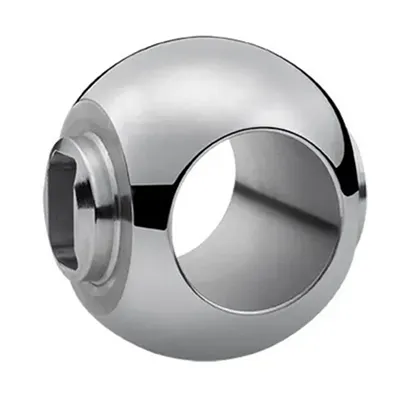
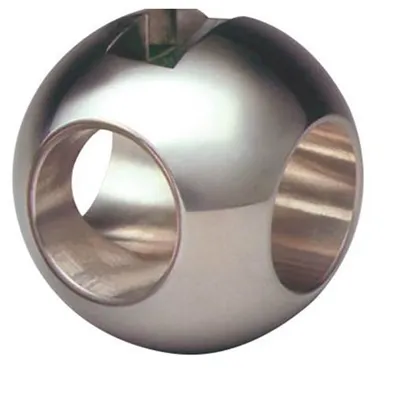
Hey there! As a supplier of Fixed Valve Balls, I often get asked about the concentricity requirement for these little but crucial components. So, let's dive right into it and figure out what concentricity means and why it's so important in the world of Fixed Valve Balls.
What is Concentricity?
Concentricity is all about how well the center of one circular feature aligns with the center of another. In the context of a Fixed Valve Ball, it refers to how precisely the ball's center aligns with the center of the valve body or the bore it's supposed to fit into. Think of it like a bullseye. The closer the center of the ball is to the center of the valve's opening, the better the concentricity.
Why is Concentricity Important for Fixed Valve Balls?
1. Leakage Prevention
One of the main reasons concentricity is so crucial is to prevent leakage. A Fixed Valve Ball that's not concentric can create gaps between the ball and the valve seat. These gaps allow fluid or gas to seep through, which can be a big problem, especially in applications where a tight seal is essential. For example, in the oil and gas industry, even a small leak can lead to significant losses and safety hazards.
2. Smooth Operation
Good concentricity ensures that the valve ball can rotate smoothly within the valve body. If the ball is off - center, it can cause uneven wear on the valve seat and the ball itself. This uneven wear can lead to increased friction, making it harder to operate the valve and reducing its overall lifespan.
3. Performance Consistency
When a Fixed Valve Ball has proper concentricity, it provides consistent performance. The valve can open and close as intended, regulating the flow of fluid or gas accurately. This is particularly important in industrial processes where precise flow control is necessary for the quality and efficiency of the operation.
How is Concentricity Measured?
Measuring concentricity usually involves using specialized equipment like coordinate measuring machines (CMMs). These machines can accurately measure the position of the ball's center relative to the valve body's center. The measurement is typically expressed in terms of a tolerance value. For example, a concentricity tolerance of ±0.05 mm means that the ball's center can deviate by a maximum of 0.05 mm from the ideal center position.
What are the Typical Concentricity Requirements for Fixed Valve Balls?
The concentricity requirements can vary depending on the application and the type of valve. In general, for high - precision applications, the concentricity tolerance may be as tight as ±0.01 mm. For less critical applications, a tolerance of ±0.05 mm or even ±0.1 mm might be acceptable.
Different Types of Valve Balls and Their Concentricity
There are several types of valve balls, each with its own concentricity requirements. Let's take a look at some of the common ones:
1. Three - way Valve Ball
Three - way valve balls are used in applications where the flow needs to be redirected between different paths. These balls often require high concentricity to ensure smooth flow redirection and prevent leakage at the junctions.
2. Floating Valve Ball
Floating valve balls are designed to float within the valve body and seal against the seats. Concentricity is crucial for these balls to ensure proper sealing and prevent any misalignment that could lead to leakage.
3. Trunnion Valve Ball
Trunnion valve balls are supported by trunnions, which help to reduce the load on the seats. However, concentricity is still important to ensure that the ball rotates smoothly and provides a tight seal.
Meeting the Concentricity Requirements
As a Fixed Valve Ball supplier, we take concentricity very seriously. We use state - of - the - art manufacturing processes and quality control measures to ensure that our valve balls meet the required concentricity standards. Our team of experts carefully monitors each step of the production process, from material selection to final inspection.
We start by choosing high - quality materials that are suitable for the specific application. Then, we use advanced machining techniques to shape the valve balls with high precision. After machining, we perform thorough inspections using CMMs and other measuring tools to verify the concentricity. If a valve ball doesn't meet the required tolerance, we take corrective actions, such as re - machining or rejecting the part.


Conclusion
In conclusion, concentricity is a critical factor in the performance and reliability of Fixed Valve Balls. It affects leakage prevention, smooth operation, and performance consistency. Different types of valve balls have different concentricity requirements, and it's essential to meet these requirements to ensure the proper functioning of the valves.
If you're in the market for Fixed Valve Balls and want to ensure that you're getting high - quality products with the right concentricity, don't hesitate to reach out. We're here to provide you with the best solutions for your valve ball needs. Whether you need Three - way Valve Balls, Floating Valve Balls, or Trunnion Valve Balls, we've got you covered. Let's have a chat and discuss how we can meet your specific requirements.
References
- Valve Handbook, by Robert A. Smith
- Industrial Valve Technology, by John Doe