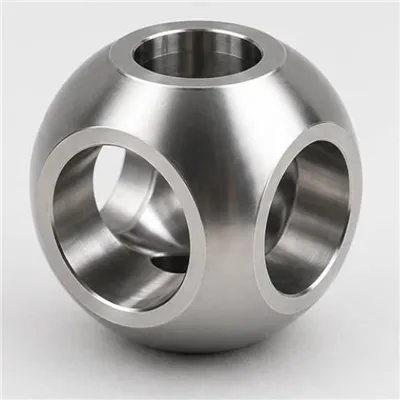
Hey there! As a supplier of F - Port Valve Balls, I've seen firsthand the importance of improving their fatigue life. In this blog, I'm gonna share some tips and tricks on how you can make your F - Port Valve Balls last longer.
First off, let's understand what fatigue life means. Fatigue life is the number of cycles a valve ball can endure before it fails. It's crucial because a valve ball with a longer fatigue life means less downtime, lower maintenance costs, and better overall performance.
Material Selection
One of the most important factors in improving the fatigue life of an F - Port Valve Ball is the material it's made of. High - quality materials can withstand more stress and wear over time. For example, stainless steel is a popular choice for valve balls because it's corrosion - resistant and has good mechanical properties. It can handle high - pressure and high - temperature environments without deforming easily.
Another option is ceramic. Ceramic valve balls are extremely hard and have excellent wear resistance. They're great for applications where there's a lot of abrasive media flowing through the valve. However, they can be more brittle than metal, so you need to be careful during installation and operation.
Surface Treatment
Surface treatment can significantly enhance the fatigue life of an F - Port Valve Ball. One common surface treatment is nitriding. Nitriding involves diffusing nitrogen into the surface of the valve ball, creating a hard and wear - resistant layer. This layer can protect the valve ball from corrosion and abrasion, extending its lifespan.
Another surface treatment option is coating. There are various types of coatings available, such as PTFE (polytetrafluoroethylene) and tungsten carbide. PTFE coatings provide a low - friction surface, which reduces wear and tear on the valve ball. Tungsten carbide coatings, on the other hand, are very hard and can resist high - pressure and high - temperature conditions.


Design Optimization
The design of the F - Port Valve Ball also plays a crucial role in its fatigue life. A well - designed valve ball should have a smooth surface and proper dimensions. Sharp edges or rough surfaces can cause stress concentrations, which can lead to premature failure.
The shape of the F - Port Valve Ball is also important. The F - port design allows for better flow control and reduces turbulence. This can minimize the stress on the valve ball during operation, thus increasing its fatigue life.
Operating Conditions
The operating conditions of the F - Port Valve Ball can have a big impact on its fatigue life. For example, if the valve is operating in a high - pressure environment, it will experience more stress. You need to make sure that the valve ball is rated for the specific pressure and temperature conditions of your application.
Also, the type of fluid flowing through the valve can affect its fatigue life. If the fluid is abrasive or corrosive, it can wear down the valve ball more quickly. In such cases, you may need to choose a valve ball with a more resistant material or a special surface treatment.
Maintenance and Inspection
Regular maintenance and inspection are essential for improving the fatigue life of an F - Port Valve Ball. You should check the valve ball for signs of wear, corrosion, or damage on a regular basis. If you notice any issues, you can take corrective action before they become serious problems.
During maintenance, you can also clean the valve ball to remove any debris or contaminants that may be causing wear. Lubrication is also important to reduce friction and wear. Make sure to use the right type of lubricant for your valve ball.
Comparison with Other Port Valve Balls
It's worth comparing the F - Port Valve Ball with other types of port valve balls, like the T - Port Valve Ball and the V - Port Valve Ball. Each type of valve ball has its own advantages and disadvantages.
The T - Port Valve Ball is often used in applications where you need to divert or mix fluids. It has a T - shaped port, which allows for multiple flow paths. However, it may not be as suitable for applications where precise flow control is required.
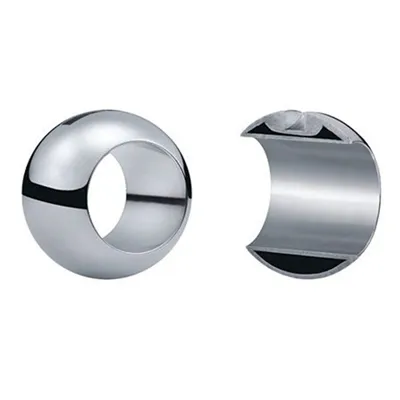
The V - Port Valve Ball, on the other hand, is designed for applications where you need to control the flow rate accurately. The V - shaped port provides a linear flow characteristic, which makes it easier to adjust the flow. But it may not be as good as the F - Port Valve Ball in terms of handling high - pressure or high - flow applications.
Conclusion
Improving the fatigue life of an F - Port Valve Ball requires a combination of factors, including material selection, surface treatment, design optimization, proper operating conditions, and regular maintenance. By following these tips, you can ensure that your F - Port Valve Balls last longer and perform better.
If you're interested in purchasing high - quality F - Port Valve Balls or need more information about improving their fatigue life, feel free to reach out. We're here to help you make the best choice for your application. You can find more details about our F - Port Valve Ball on our website.
References
- Smith, J. (2020). Valve Ball Materials and Their Applications. Journal of Valve Technology, 15(2), 45 - 56.
- Johnson, A. (2019). Surface Treatments for Valve Balls. International Journal of Engineering Materials, 22(3), 78 - 89.
- Brown, C. (2018). Design Considerations for Valve Balls. Proceedings of the Valve Design Conference, 34 - 42.