Can valve balls be used in cryogenic applications? This is a question that often arises in industries dealing with extremely low temperatures, such as liquefied natural gas (LNG) processing, cryogenic storage, and superconducting systems. As a valve balls supplier, I have encountered this query numerous times, and I'm here to provide a comprehensive answer based on scientific knowledge and practical experience.
Understanding Cryogenic Conditions
Cryogenic applications typically involve temperatures below -150°C (-238°F). At these frigid temperatures, materials behave very differently compared to normal conditions. For instance, metals can become brittle, losing their ductility and toughness. This change in material properties can have a significant impact on the performance and reliability of valve balls.
Properties of Valve Balls for Cryogenic Use
- Material Selection
- Stainless steel is a common choice for valve balls in cryogenic applications. Grades like 316L and 304L are popular because they retain their mechanical properties at low temperatures. They have good corrosion resistance, which is crucial in cryogenic environments where moisture and other contaminants can cause damage.
- Some high - nickel alloys, such as Inconel, are also used. These alloys offer excellent strength and resistance to thermal shock, which is important when the valve experiences rapid temperature changes.
- Thermal Expansion
- One of the key challenges in cryogenic applications is thermal expansion. As the temperature drops, materials contract. Valve balls need to be designed in such a way that they can accommodate this contraction without causing leakage or binding in the valve. The design should take into account the coefficient of thermal expansion of the materials used.
- Surface Finish
- A smooth surface finish is essential for valve balls in cryogenic applications. A rough surface can cause increased friction, which may lead to wear and tear over time. Additionally, a smooth surface helps in achieving a better seal, preventing leakage of cryogenic fluids.
Advantages of Using Valve Balls in Cryogenic Applications
- Reliable Sealing
- Valve balls can provide a tight seal even at extremely low temperatures. The spherical shape of the ball allows for a uniform contact with the valve seat, ensuring a reliable seal. This is crucial in cryogenic applications where even a small leak can lead to significant losses and safety hazards.
- Flow Control
- Valve balls offer excellent flow control capabilities. They can be used to regulate the flow of cryogenic fluids precisely, which is important in processes such as LNG loading and unloading. The ability to control the flow rate accurately helps in maintaining the efficiency and safety of the cryogenic system.
- Durability
- When properly designed and manufactured, valve balls can withstand the harsh conditions of cryogenic applications. They are resistant to corrosion and wear, ensuring a long service life. This reduces the need for frequent replacements, saving both time and money for the end - users.
Types of Valve Balls for Cryogenic Applications
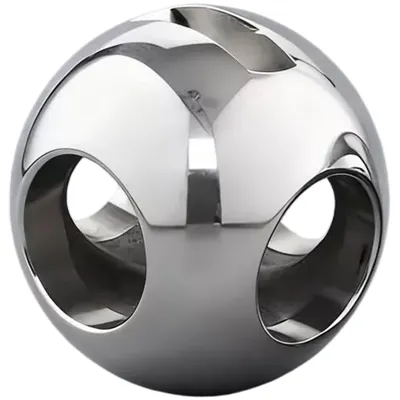
- Four - way Valve Ball
- A Four - way Valve Ball is designed to direct the flow of fluid in four different directions. In cryogenic applications, this type of valve ball can be used to switch between different cryogenic storage tanks or to control the flow in complex piping systems. It provides flexibility in flow management and can be a valuable asset in cryogenic processing plants.
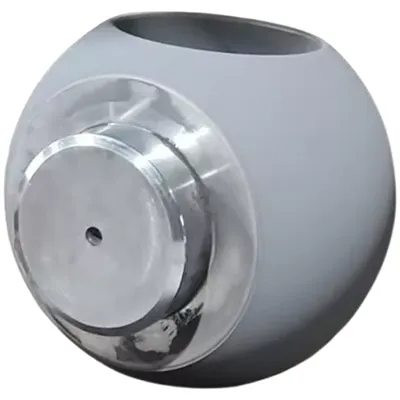
- Valve Stem Ball
- Valve Stem Ball is an important component in valve assemblies. It is used to transmit the rotational motion from the valve stem to the valve ball, allowing for precise control of the valve's opening and closing. In cryogenic applications, the valve stem ball needs to be made of materials that can withstand the low temperatures and provide smooth operation.
- X - Port Valve Ball
- The X - Port Valve Ball is designed with an X - shaped port, which offers unique flow characteristics. In cryogenic applications, this type of valve ball can be used to optimize the flow of cryogenic fluids, reducing pressure drops and improving the overall efficiency of the system.
Challenges and Solutions in Cryogenic Valve Ball Applications
- Cold Brittleness
- As mentioned earlier, materials can become brittle at low temperatures. To address this issue, proper material selection is crucial. Additionally, heat treatment processes can be used to improve the toughness of the valve balls. For example, stress relieving can help reduce internal stresses in the material, making it more resistant to cracking.
- Sealing Integrity
- Maintaining a good seal at cryogenic temperatures can be challenging. Special sealing materials, such as PTFE (polytetrafluoroethylene), are often used in cryogenic valve applications. These materials have low friction coefficients and can provide a reliable seal even at extremely low temperatures.
- Thermal Cycling
- Cryogenic systems often experience thermal cycling, where the temperature fluctuates between low and high values. This can cause stress on the valve balls. To mitigate this, valve balls can be designed with features such as expansion joints or flexible structures to accommodate the thermal expansion and contraction.
Conclusion
In conclusion, valve balls can indeed be used in cryogenic applications. With the right material selection, design, and manufacturing processes, valve balls can provide reliable sealing, excellent flow control, and long - term durability in these harsh environments. Whether it's a Four - way Valve Ball, Valve Stem Ball, or X - Port Valve Ball, each type has its own advantages and can be tailored to meet the specific needs of cryogenic systems.
If you are in need of valve balls for cryogenic applications, we are here to assist you. Our team of experts can provide you with detailed technical advice and high - quality valve balls that meet your requirements. Contact us to discuss your specific needs and start a procurement process.


References
- ASME B31.3 Process Piping Code
- API 6D Specification for Pipeline Valves
- ISO 15848 - 1 Industrial valves - Measurement, test and qualification procedures for fugitive emissions