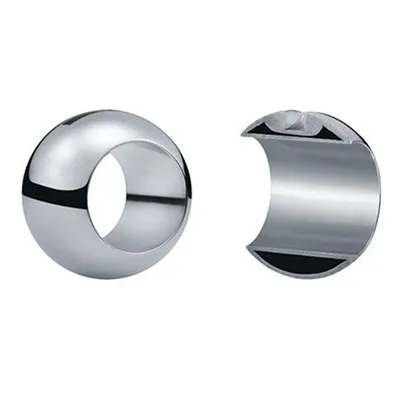
Can a floating valve ball be repaired? This is a question that often arises among those in the industrial and engineering sectors. As a supplier of floating valve balls, I've encountered this query numerous times, and I'm here to shed some light on the matter.
Understanding Floating Valve Balls
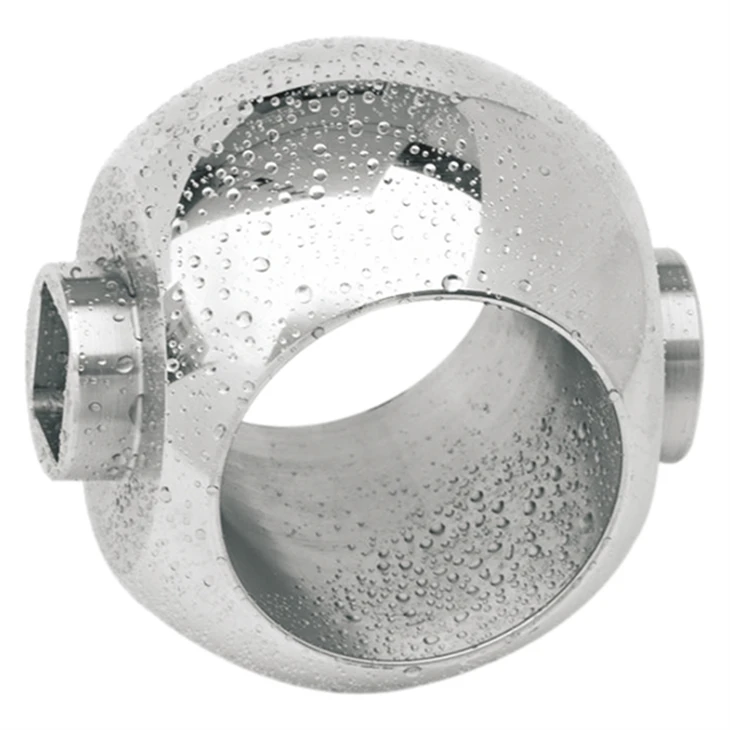
Before we delve into the repair aspect, it's crucial to understand what a floating valve ball is. A floating valve ball is a key component in many types of valves, particularly ball valves. It's designed to float within the valve body, allowing it to seal against the valve seats when the valve is closed. This floating action provides a tight seal, preventing leakage and ensuring efficient operation.
The floating valve ball's design is simple yet effective. It consists of a spherical ball that rotates within the valve body, controlling the flow of fluid or gas. When the valve is open, the ball allows the medium to pass through, and when it's closed, the ball seals against the seats, blocking the flow.
Common Issues with Floating Valve Balls
Like any mechanical component, floating valve balls can experience problems over time. Some of the common issues include:
- Wear and Tear: Continuous use can cause the ball and seats to wear down, leading to leakage.
- Corrosion: Exposure to corrosive substances can damage the surface of the ball, affecting its sealing ability.
- Scratching and Pitting: Foreign particles in the fluid can scratch or pit the ball's surface, also causing leakage.
- Deformation: Excessive pressure or temperature can cause the ball to deform, resulting in a poor seal.
Can Floating Valve Balls Be Repaired?
The answer to this question is not a simple yes or no. In some cases, floating valve balls can be repaired, while in others, replacement may be the better option.
Repairable Situations
- Minor Wear and Tear: If the wear on the ball and seats is minimal, it may be possible to repair them. This can involve resurfacing the ball and seats to restore their smoothness and sealing ability. For example, if the scratches on the ball are shallow, they can be removed through a process called lapping, which involves using an abrasive compound to smooth the surface.
- Light Corrosion: In cases where the corrosion is not severe, the ball can be cleaned and treated to prevent further corrosion. This may involve using a chemical treatment to remove the rust or corrosion and then applying a protective coating.
Non - Repairable Situations
- Severe Damage: If the ball is severely deformed, cracked, or has extensive pitting, repair may not be feasible. In such cases, replacement is the most practical solution. For instance, if the ball has a large crack that compromises its structural integrity, it cannot be repaired and must be replaced.
- Excessive Wear: When the wear on the ball and seats is so significant that they cannot be restored to their original dimensions, replacement is necessary. This is often the case in high - pressure or high - flow applications where the components are subject to more stress.
The Repair Process
If a floating valve ball is deemed repairable, the following steps are typically involved in the repair process:
- Inspection: The first step is to thoroughly inspect the ball and seats to determine the extent of the damage. This may involve using specialized tools such as calipers, micrometers, and surface roughness testers.
- Cleaning: The ball and seats are cleaned to remove any dirt, debris, or corrosion. This can be done using solvents, brushes, and ultrasonic cleaners.
- Resurfacing: If the damage is minor, the ball and seats are resurfaced to restore their smoothness. This can be achieved through lapping, grinding, or honing.
- Coating: After resurfacing, a protective coating may be applied to the ball and seats to prevent future corrosion and wear.
- Testing: Once the repair is complete, the valve is tested to ensure that it functions properly and provides a tight seal.
Comparing with Other Types of Valve Balls
It's also worth comparing floating valve balls with other types of valve balls, such as Fixed Valve Ball, Valve Stem Ball, and Three - way Valve Ball.
- Fixed Valve Ball: Unlike floating valve balls, fixed valve balls are held in place by a stem and do not float within the valve body. They are typically used in applications where precise control of the flow is required.
- Valve Stem Ball: Valve stem balls are designed to be attached to the valve stem, allowing for easy operation of the valve. They are commonly used in smaller valves and applications where space is limited.
- Three - way Valve Ball: Three - way valve balls have three ports, allowing for the diversion of flow in different directions. They are often used in complex piping systems where multiple flow paths are required.
When to Choose Repair or Replacement
Deciding whether to repair or replace a floating valve ball depends on several factors:
- Cost: Repairing a valve ball can be more cost - effective than replacement, especially if the damage is minor. However, if the repair costs are close to the cost of a new ball, replacement may be the better option.
- Downtime: Repairing a valve ball may take less time than replacing it, especially if the repair can be done on - site. This can minimize downtime and reduce the impact on operations.
- Long - term Performance: If the valve ball has been in service for a long time and has experienced significant wear, replacement may be the better choice to ensure long - term performance and reliability.
Conclusion
In conclusion, while floating valve balls can be repaired in some cases, it's important to carefully assess the damage and consider the cost, downtime, and long - term performance before making a decision. As a supplier of floating valve balls, we are committed to providing our customers with high - quality products and expert advice on valve ball repair and replacement.
If you have any questions about floating valve balls, their repair, or if you're interested in purchasing our products, please feel free to reach out to us. We are always ready to assist you with your valve ball needs.

References
- ASME B16.34 - Valves - Flanged, Threaded, and Welding End
- API 6D - Pipeline Valves - Specification for Pipeline Valves
- ISO 5208 - Industrial Valves - Pressure Testing of Valves