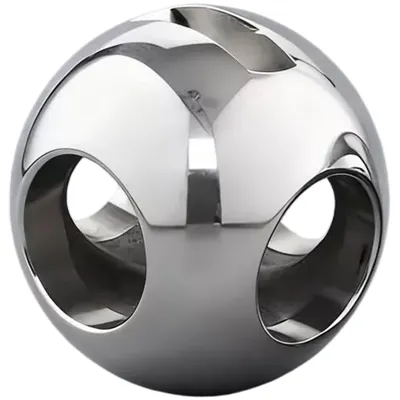
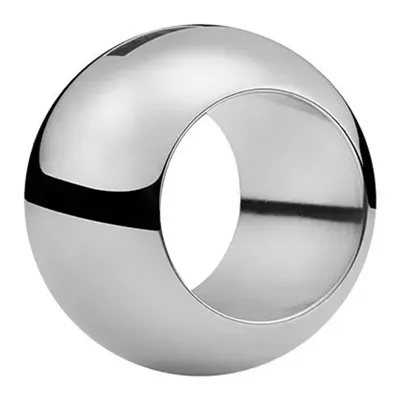
Every ball valve starts with a decision that most buyers never see: should the ball be machined from a solid bar or forged billet, or formed as a hollow shell? The choice between a solid valve ball and a hollow valve ball is not a cost shortcut or a styling detail. It determines operating torque, pressure rating, stem loading, and how the component behaves in large-diameter and high-pressure service. For industrial buyers and valve manufacturers sourcing precision components, understanding when a solid ball is the right call and when a hollow ball is the engineering answer can prevent torque problems, weight penalties, and unnecessary expense. This guide compares solid vs hollow valve balls, explains how each is manufactured, and helps you choose the right design for your ball valve application.
Solid vs Hollow Valve Balls at a Glance
Before diving into manufacturing details, here is the practical comparison that matters for most sourcing decisions. A solid valve ball is machined from one continuous piece of material; a hollow valve ball is produced as a shell with an internal cavity. Everything else - torque, weight, strength, and cost - flows from that single structural difference.
| Attribute | Solid Valve Ball | Hollow Valve Ball |
|---|---|---|
| Structure | One continuous piece of material | Shell with a machined internal cavity |
| Weight | Heavier | Lighter, typically 15–40% less |
| Operating torque | Higher | Lower, reducing actuator size |
| Strength and rigidity | Maximum, for high pressure | Sufficient with proper wall design |
| Typical size range | Small to medium valves | Large-diameter valves |
| Material cost | Higher per ball | Lower material input |
| Manufacturing complexity | Simpler machining sequence | Requires cavity machining or forming |
| Sealing surface integrity | Uniform material, predictable | Good with verified wall thickness |
What Is a Solid Valve Ball?
A solid valve ball is machined from a single piece of round bar, forging, or billet stock. The full bore is drilled through the center for flow, the stem slot is milled, and the spherical outer surface is turned, ground, and polished to its final roundness. Because the ball is one continuous piece, there are no welds, no joints, and no internal interfaces that could weaken under pressure or corrode over time.
Solid balls are the default choice for small and medium ball valves, typically up to about 8–10 inches, where material weight is manageable and the manufacturing sequence is straightforward. They are also preferred in high-pressure service, where the complete cross-section of material carries the mechanical load and provides maximum resistance to deformation under line pressure. For floating ball valves, where the ball is pushed against the downstream seat by line pressure, the solid design adds the rigidity that keeps the sealing geometry stable.
What Is a Hollow Valve Ball?
A hollow valve ball is a shell with a controlled internal cavity. It can be produced in two ways: by machining the cavity out of a larger billet, or by forming the shell and then machining the external sphere. In both cases, the wall thickness is designed to carry the mechanical load while the cavity removes material that contributes little to strength.
Hollow balls exist for a practical reason: in large-diameter valves, a solid ball of 16, 20, or 24 inches would be extremely heavy. That weight raises operating torque, forces the valve manufacturer to oversize the actuator, complicates handling, and inflates material cost. A hollow ball removes a meaningful share of that weight while keeping the sealing surface and structural wall at full strength. This is why hollow valve balls dominate large-diameter and high-cycle ball valves, where actuator economics and rotating inertia matter as much as static strength.
How Each Design Is Manufactured
The manufacturing route for each design is different, and the difference shows up in quality. A solid valve ball follows a direct machining sequence: bar or billet preparation, CNC turning of the spherical surface, bore drilling, stem slot milling, then grinding and polishing. At a precision valve ball manufacturer with machining accuracy up to 0.001 mm, roundness and surface finish are controlled entirely by the grinding and polishing steps.
A hollow valve ball adds steps. The cavity must be machined or formed first, then the wall thickness verified, then the external sphere machined. Wall thickness uniformity is the critical quality point: a thin spot in the wall is a stress concentration that can deform or leak under pressure. Reliable suppliers verify wall thickness and perform pressure and dimensional checks on the finished shell before it moves to grinding.
Both designs then receive the same surface treatment options - hard chrome plating, electroless nickel plating (ENP), or tungsten carbide coating - depending on the application media. The coating decision is independent of the solid vs hollow choice and is driven by corrosion, wear, and temperature requirements.
Weight, Torque and Actuator Economics
The most immediate consequence of choosing solid vs hollow is weight, and weight drives torque. Operating torque has several components - seat friction, stem seal friction, and the inertia of the ball itself. In a large valve, ball weight contributes a substantial share of the total torque, especially during fast operation or emergency shutdown.
A hollow ball typically reduces ball weight by 15–40% compared with a solid ball of the same diameter. That reduction directly lowers the actuator torque requirement, allowing a smaller actuator, a faster response, and lower capital cost. For quarter-turn valves on skids where space and compressed air or electric power are limited, this is often the deciding factor. Conversely, a solid ball in the same valve would require a larger actuator and consume more energy on every cycle.
There is a trade-off: the hollow shell must still deliver the same sealing performance and pressure containment. The engineering answer is to design the wall thickness for the duty and to verify it by measurement, not by assumption. A specialist valve ball manufacturer with documented process control and inspection can supply hollow balls with verified wall thickness and certified dimensions.
Strength, Pressure and Application Fit
For high-pressure and severe-service duty, solid valve balls retain an engineering edge. The full cross-section of a solid ball resists deformation of the bore and the sealing surface under extreme pressure, and the uniform material eliminates any question about wall integrity. Solid balls are therefore common in high-pressure floating valves, hydraulic systems, and applications above roughly Class 600, where every component must be conservative by design.
Hollow balls, with properly designed walls, perform reliably in the majority of large-diameter applications: water systems, general process piping, storage and transfer lines, and medium-pressure gas service. The key is matching the design to the duty. A buyer should not assume hollow means weaker, nor that solid is always over-engineered; the right choice depends on valve size, pressure class, actuator constraints, and media.
In practice, many valve manufacturers use solid balls for the small-to-medium range and hollow balls for the large-diameter range, so a single supplier relationship often covers both. An experienced OEM valve ball manufacturer can provide either design with the same precision, surface finish, and coating quality.
Quality Points to Verify With Your Supplier
Whichever design you choose, the quality controls are what separate a reliable component from a recurring problem. Verify these points with any valve ball manufacturer before ordering:
- Roundness: spherical deviation directly affects leakage and seat wear; demand measured roundness data rather than a generic tolerance claim.
- Surface roughness: the sealing surface should be ground and polished, with roughness values low enough to seal without excessive seat wear.
- Wall thickness (hollow balls): require documented wall thickness verification for hollow designs, especially at the ports and stem slot.
- Material certification: confirm the grade, heat number, and mechanical properties with mill certificates.
- Coating quality: for hard chrome, ENP, or tungsten carbide, verify coating thickness, adhesion, and coverage on the sealing surface.
- Traceability and process control: a manufacturer with ISO 9001 and documented inspection steps can back every batch with records.
At a 4,000 m² precision factory with a team of more than 70 and over 200 pieces of processing and inspection equipment, both solid and hollow valve balls are machined on the same controlled lines, with materials covering a range from -196°C to 500°C and surface treatments applied in-house. That kind of integration - machining, grinding, coating, and inspection under one roof - is what lets a supplier control quality end to end.
How to Choose Between Solid and Hollow Valve Balls
Use the following decision logic when specifying your next valve ball:
- Valve size below ~8 inches: solid is the standard and usually the most economical choice; weight is not a constraint at this scale.
- Large-diameter valves (above ~10 inches): hollow reduces weight and actuator cost, provided the wall is engineered for the pressure class.
- High-pressure or severe service: solid provides maximum rigidity and conservative load-carrying capacity; confirm the pressure class with your supplier.
- High-cycle or fast-acting service: hollow reduces rotating inertia and torque, which protects the actuator and extends cycle life.
- Floating vs trunnion mounting: floating valves typically use solid balls; trunnion-mounted valves in large sizes commonly use hollow balls with support bearings.
When the design intent is clear, share your valve size, pressure class, media, and temperature with the supplier so they can recommend the right configuration. A responsible manufacturer will tell you when solid is over-specified and when hollow would be under-engineered, rather than defaulting to whichever option carries the higher margin.
Looking for a Reliable Valve Ball Manufacturer for Your Next Project?
Whether your design calls for a solid valve ball in high-pressure service or a hollow valve ball in a large-diameter valve, the manufacturing and quality controls behind it decide how long the valve stays leak-tight. A specialist manufacturer with precision machining up to 0.001 mm, in-house surface treatment, and full inspection capability can supply either design with certified quality. Contact our team with your valve size, pressure class, and media to discuss the right configuration, or explore our valve ball manufacturing capabilities.
Frequently Asked Questions
Is a hollow valve ball weaker than a solid one?
Not necessarily. A hollow ball with correctly engineered wall thickness carries the same pressure class as a solid ball of the same diameter. The risk appears only when wall thickness is poorly designed or unverified. Quality suppliers measure and certify wall thickness for hollow designs.
Why do large ball valves use hollow balls?
Weight and torque. A large solid ball would be extremely heavy, raising operating torque and forcing oversized actuators. Hollow balls reduce weight by 15–40%, lowering torque, actuator size, and cost, while maintaining the structural wall required for the duty.
Can a solid valve ball be used in a trunnion-mounted valve?
Yes. Trunnion-mounted valves in small and medium sizes can use solid balls, while large-diameter trunnion valves usually use hollow balls to keep weight manageable. The mounting style and ball structure are independent decisions driven by size, pressure, and torque requirements.
Does the coating choice depend on the solid vs hollow structure?
No. Coatings such as hard chrome, ENP, and tungsten carbide are applied to both solid and hollow valve balls. The coating decision is driven by media, temperature, wear, and corrosion requirements, not by whether the ball is solid or hollow.
How do I verify the quality of a hollow valve ball?
Ask for wall thickness measurements, roundness data, surface roughness values, and material certificates. A supplier with ISO 9001 and documented inspection can provide these records for every batch.