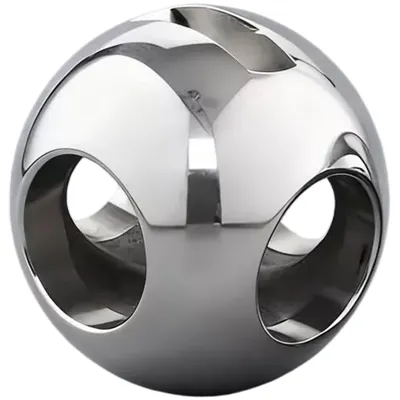
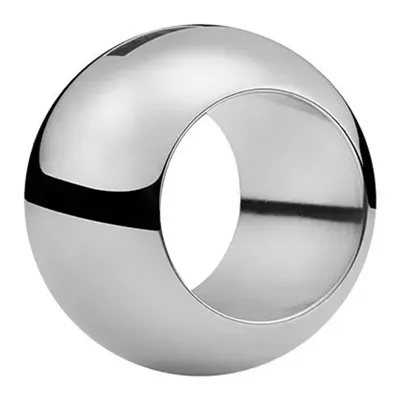
Most valve balls sold worldwide are not catalog items. They are custom valve balls machined to a specific valve design - a defined diameter, port configuration, stem slot, material grade, and surface finish that must match one valve model and one set of service conditions. For industrial buyers and valve manufacturers, the quality of that custom part is decided long before machining starts: it is decided by the specification you send to the supplier. A vague inquiry produces a vague quotation; a complete specification produces a component that seals, cycles, and survives as intended. This guide walks through six steps for specifying custom valve balls, from defining service conditions to agreeing on inspection and documentation, so you can source precision valve balls from a custom valve ball manufacturer with confidence.
Why Custom Valve Balls Demand a Written Specification
A valve ball carries the sealing line of the entire valve. Its spherical surface contacts the seats, its bore passes the media, and its stem slot transmits torque from the actuator. Every one of those functions depends on geometry held to very tight tolerances. When a ball is machined to a standard size, slight variations can be absorbed by the valve design; when a ball is custom-made for one valve, there is no room for drift. The specification must therefore capture everything the valve designer knows and the machinist needs: operating media, pressure and temperature range, mating seat type, and the inspection criteria used at incoming goods.
A complete specification also protects both sides. It gives the manufacturer an unambiguous basis for quotation, tooling, and production planning, and it gives the buyer a contractual benchmark for acceptance. Most importantly, it reduces the risk of the most expensive failure mode in custom components: the part is machined correctly to the drawing, but the drawing does not match the real service conditions. Working through the six steps below before sending out an inquiry closes that gap.
Step 1: Define the Service Conditions and Valve Interface
Start with the environment the ball will live in, not with the drawing. The media, pressure, temperature, and duty cycle determine the material grade, the coating, and even the ball structure, so they must be stated explicitly. Record the following for every inquiry:
- Media composition: what fluid passes through the valve, including chlorides, acids, abrasive particles, or intermittent dry-running phases.
- Operating and design pressure: normal working pressure plus the maximum the valve must withstand.
- Temperature range: minimum and maximum service temperature, including process upsets and cleaning cycles.
- Valve type and size: floating or trunnion mounted, nominal bore, and whether the ball must be solid or hollow for large diameters.
- Mating components: seat type and material, stem design, and whether the valve will be automated, because torque targets depend on them.
If the application is cryogenic service below roughly −50°C, or high-temperature service above roughly 200°C, say so in the first line of the inquiry. A custom valve ball manufacturer that routinely works across −196°C to 500°C will translate those conditions into the right material family and finishing route immediately.
Step 2: Select the Material Grade and Certification Basis
The material grade is the second decision, and it must follow from the service conditions defined in Step 1. For general industrial and mildly corrosive media, 304 stainless steel is the economical baseline. Where chlorides, seawater, or chemical media are present, 316 or 316L improves pitting and crevice corrosion resistance. For offshore, high-chloride, and high-strength requirements, duplex 2205 and super duplex 2507 provide roughly double the yield strength of austenitic grades together with superior resistance to stress corrosion cracking. For severe service - strong acids, high temperatures, or specialty chemical media - nickel alloys such as Inconel, Monel, and Hastelloy are the established choices.
State the grade by its recognized designation, and also state the certification basis you expect. Ask whether the supplier can provide material certificates traceable to the heat of the raw material. A custom valve ball machined from the wrong heat, or from a substitute grade substituted without approval, is a latent failure inside the finished valve. Reputable custom valve ball manufacturers hold ISO 9001 quality systems and keep material verification as part of the standard process rather than an extra charge.
Step 3: Lock Down Geometry, Tolerances, and Surface Finish
This is the core of the drawing package. The geometry of a valve ball is defined by more than its outside diameter. The critical items are the spherical surface, the bore, and the stem slot, and each has its own tolerance and finish requirement.
| Geometry item | Why it matters | Typical requirement |
|---|---|---|
| Ball diameter | Controls sealing interference with the seats and valve assembly fit | Diameter tolerance per drawing, often ±0.02 to ±0.05 mm |
| Sphericity / roundness | A non-spherical ball cannot form a uniform sealing line | Down to 0.001 mm on precision grades |
| Bore diameter and position | Defines flow capacity and must align with the pipeline and seat openings | Bore tolerance and concentricity per drawing |
| Surface roughness | Affects sealing, friction, torque, and seat wear | Ra 0.2–0.4 µm typical after polishing |
| Stem slot width, depth, position | Transmits torque and fixes the angular relationship of bore to drive | Slot tolerance and angular position per drawing |
When you send a drawing, make sure the tolerances are intentional, not incidental. A common sourcing mistake is to carry over tight general tolerances from a different component, which raises cost without improving the part. Specify tight tolerances where the sealing function demands them - ball diameter, sphericity, and surface finish - and relax them where they do not matter. A specialist manufacturer can hold spherical accuracy to 0.001 mm using CNC machining and precision grinding, but that precision should be applied where the design actually needs it.
Step 4: Specify the Surface Treatment for the Media
The surface treatment is part of the specification, not a production afterthought. It determines how the ball resists wear, corrosion, galling, and media attack over the life of the valve. Standard options and their typical service are:
- Electroless nickel plating (ENP): uniform coating for corrosion resistance and moderate wear protection, suited to chemical and general service.
- Hard chrome plating: hard, low-friction surface for abrasive media and high-cycle operation.
- Tungsten carbide coating (HVOF): dense, extremely hard coating for severe erosion, high pressure drops, and slurry service.
- Stellite overlay: weld-applied alloy for high-temperature and metal-seated applications where the sealing surface itself must survive wear.
State the coating, the minimum thickness, and the acceptance criterion. If no coating is required, write "no coating, machined surface" so the supplier does not assume one. Also confirm that the coating process does not distort the geometry achieved in grinding - a good supplier sequences grinding, coating, and final finishing so that the sealing surface remains within tolerance after treatment.
Step 5: Agree on Inspection, Testing, and Documentation
Custom valve balls are usually accepted on the strength of inspection data, not by a visual check on the dock. Define which inspections the manufacturer must perform and which records must accompany the shipment. The essential items for precision valve balls are dimensional inspection, sphericity or roundness measurement, surface roughness measurement, hardness testing where the material or coating requires it, and material verification. For pressure-containing or safety-related duty, also state whether you require a full material certificate for each batch.
Agreeing on inspection in the specification prevents the most common dispute in custom machining: the buyer assumes 100% inspection, and the supplier performs sample checks. Write the sampling rule into the inquiry. A manufacturer operating under ISO 9001 with dedicated testing equipment will normally provide dimensional and roundness reports as standard documentation for custom valve balls, with full traceability from finished part back to the material heat.
Step 6: Validate a Sample Before Series Production
The final step is about proof. For any new custom valve ball design, request a first-article sample and validate it in your own valve assembly before committing to series quantities. Check the ball in the actual seats, measure the operating torque, and confirm that the bore aligns with the flow path and that the stem slot indexes correctly against the drive. Only after the sample passes your assembly test should the design be released for series production.
Confirm the lead time for the sample and for series delivery at the inquiry stage, and ask how design revisions are handled. A supplier with a focused production facility - a factory of roughly 4,000 m², a 70+ professional team, and 200+ pieces of production and testing equipment - can usually absorb drawing iterations and sample cycles far more reliably than a general machine shop, because valve ball production is its core process rather than a side activity.
Need a Custom Valve Ball Manufacturer for Your Next Design?
Zhejiang Jigong Valve Co., Ltd. specializes in custom valve balls and precision valve components, machined to 0.001 mm accuracy from stainless steel, duplex, super duplex, and nickel alloys across a service range of −196°C to 500°C. Surface treatments include ENP, hard chrome, tungsten carbide (HVOF), and Stellite overlay, supported by ISO 9001 quality control and full material documentation.
Send us your drawing and service conditions, and our engineers will review the specification with you before quoting - so the part you receive matches the valve you build.
Contact Us for a QuotationCommon Mistakes When Specifying Custom Valve Balls
- Sending a drawing without service conditions, leaving the manufacturer to guess the media, temperature, and pressure class.
- Specifying 316L for every application "to be safe," and paying for material performance the valve never needs.
- Carrying over unnecessarily tight general tolerances that increase machining cost without improving sealing.
- Forgetting the stem slot angular relationship, so the assembled valve opens and closes in the wrong orientation.
- Assuming a coating is included because the inquiry mentions a "polished ball."
- Skipping the sample stage and discovering an interface problem only after series parts arrive.
Frequently Asked Questions
What information do I need to provide when ordering custom valve balls?
At minimum, provide the media and its composition, working and design pressure, temperature range, valve type and size, the ball diameter and bore dimensions from your drawing, material grade, surface treatment, and your inspection and documentation requirements. The more complete the service conditions, the more accurate the quotation and the lower the risk of a specification error.
What is the typical minimum order quantity for custom valve balls?
It depends on the manufacturer and the complexity of the part. Many custom valve ball manufacturers accept small first batches or even prototype quantities to qualify a design, then move to series volumes. Ask for the sample policy and the series MOQ at the inquiry stage, because both affect your project planning.
What is the difference between a custom valve ball and a standard valve ball?
A standard valve ball is machined to common industry sizes and configurations and can be supplied from stock or routine production. A custom valve ball is machined to a specific customer drawing, with defined dimensions, port geometry, material, and surface treatment matched to one valve design. Most OEM valve manufacturers use custom valve balls because the ball must fit their own body, seats, and stem exactly.
Which materials are available for custom valve balls?
Stainless steel grades including 304, 316, and 316L, duplex 2205, super duplex 2507, and nickel alloys such as Inconel, Monel, and Hastelloy, covering service temperatures from about −196°C to 500°C. The grade is selected from the media, pressure, and temperature of your application.
How is roundness measured and reported on a valve ball?
Roundness, or sphericity, is measured with a precision roundness measuring instrument or by CMM on the finished spherical surface and reported as a deviation value, for example down to 0.001 mm on precision grades. The measurement report should accompany the shipment together with dimensional and surface roughness data, so your incoming inspection can verify the part against the specification.