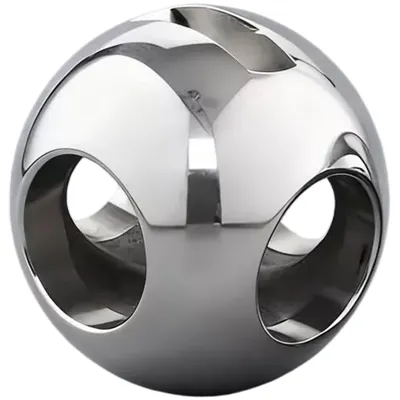
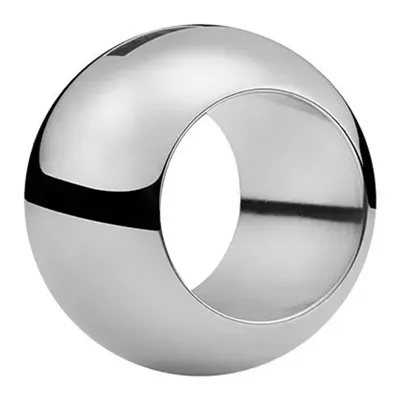
High pressure oil and gas service is among the most demanding environments for ball valves and their core sealing components. Downhole tools, wellhead equipment, production manifolds, and pipeline systems operate under extreme pressures, aggressive media, and wide temperature swings. The valve ball must maintain sealing integrity, dimensional stability, and wear resistance under these conditions for years of continuous service. This guide explores the key engineering considerations, material options, coating solutions, and manufacturing requirements for valve balls used in high pressure oil and gas applications.
Contents
Why High Pressure Service Is Demanding
In high pressure oil and gas applications, the valve ball is not just a flow-control element - it is a critical sealing and pressure-holding component. Operating pressures commonly range from 500 psi in production lines to over 15,000 psi in wellhead and Christmas tree service, and in some subsea applications even higher. Under these conditions, the sealing surfaces of the valve ball experience extreme contact stress against the seats.
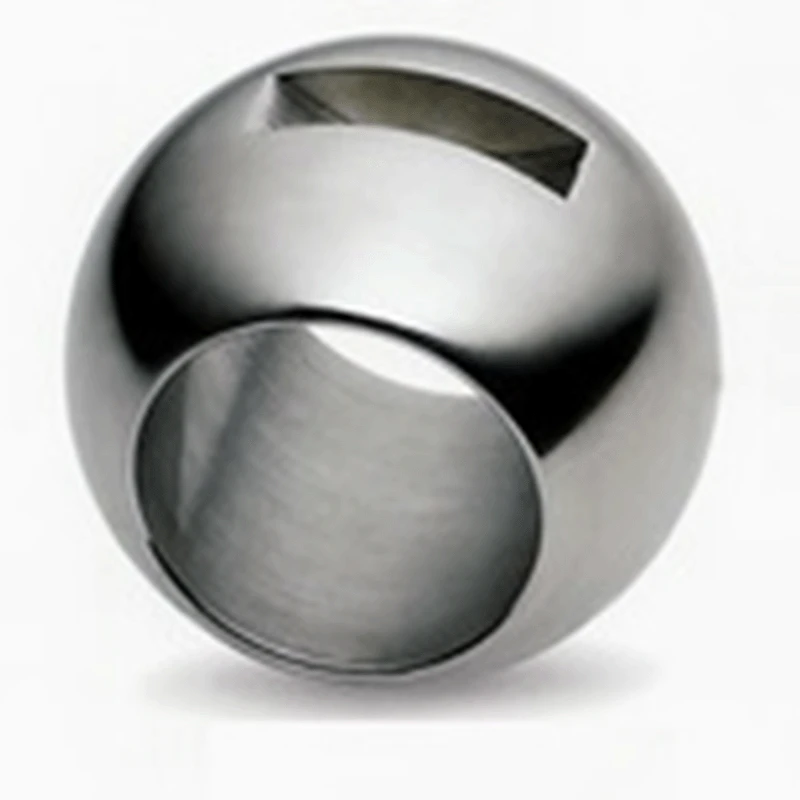
Key Standards and Pressure Ratings
Valve balls for high pressure oil and gas service are typically specified according to established international standards. Understanding these ratings helps buyers communicate requirements clearly and verify that a manufacturer can supply a compliant component.
| Standard | Scope | Relevance to Valve Balls |
|---|---|---|
| API 6D | Pipeline and piping valves | Defines pressure-temperature ratings, testing, and materials |
| API 608 | Metal ball valves for petroleum service | Applies to flanged and threaded ball valves |
| API 598 | Valve inspection and testing | Covers shell and seat pressure testing |
| ASME B16.34 | Valve pressure-temperature ratings | Defines pressure classes (e.g., 150–4500) |
| NACE MR0175 | Materials for sour service (H₂S) | Critical for oil and gas components exposed to H₂S |
Design Considerations for Valve Balls
Not all valve balls are suited to high pressure service. The design must be selected to handle the specific pressure, size, and operational demands of the application. Two primary designs dominate oil and gas service.
Floating Valve Ball
Suitable for moderate pressures and smaller diameters. The ball is held in place by the seats, and line pressure helps press the ball against the downstream seat to improve sealing. Used in many standard production and distribution applications.
Trunnion Mounted Valve Ball
Supported by upper and lower trunnions, which absorb the pressure load and reduce stress on the seats. This design is preferred for large-diameter and high pressure valves, offering lower operating torque and more stable sealing under extreme conditions.
For high pressure applications, the bore design and port configuration also matter. Reduced-bore balls reduce the exposed pressure area and operating torque, while full-bore designs maintain maximum flow capacity. V-port and other shaped-port balls may be specified where throttling or flow control is required, though these are less common in pure on/off high pressure isolation service.
Material Selection for Oil and Gas
Material selection is the single most important decision for high pressure valve balls. The material must combine sufficient mechanical strength for the pressure rating with corrosion resistance for the produced media and compliance with sour service requirements where applicable.
| Material Grade | Key Characteristics | Typical High Pressure Use |
|---|---|---|
| SS316 / SS316L | Good corrosion resistance, economical, NACE-compatible options | Sweet production and general service |
| Duplex 2205 | High strength, excellent chloride and stress corrosion resistance | Offshore, high chloride, high pressure service |
| Super Duplex 2507 | Superior strength and corrosion resistance | Subsea, seawater, severe offshore conditions |
| Inconel 625 | High strength, exceptional corrosion and temperature resistance | Sour service, high temperature, corrosive gas |
| Monel 400 | Excellent resistance to hydrofluoric acid and seawater | Marine, sour and high chloride service |

Coating and Surface Treatment Solutions
Surface treatments are essential in high pressure oil and gas valve balls to improve hardness, reduce friction, resist erosion, and extend service life under abrasive and high-stress conditions.
| Coating Type | Key Benefits | Typical Use |
|---|---|---|
| Electroless Nickel (ENP) | Uniform corrosion protection, moderate hardness | General corrosion protection and lubrication |
| Hard Chrome Plating | High hardness, excellent wear resistance | Abrasive and high-cycle service |
| Tungsten Carbide Coating | Extreme hardness, superior erosion resistance | Sand-laden and severe erosion service |
| HVOF Sprayed Coatings | Dense, high-quality metallic and cermet coatings | High pressure and high temperature applications |
| Stellite Overlay | Excellent hardness and corrosion resistance | Wear surfaces in severe service |
Coating Selection Considerations
- Match coating hardness and thickness to the expected contact stress and abrasion level
- Confirm coating integrity and post-coating surface finish requirements for sealing
- Verify NACE compliance when coatings are applied in sour service
- Ensure the base material is compatible with the coating and heat-treating process
- Consider post-coating grinding or polishing to maintain the spherical accuracy needed for sealing
Precision Manufacturing Requirements
High pressure valve balls demand a level of machining precision that directly affects sealing performance and service life. Roundness, surface finish, and dimensional accuracy must be held to tight tolerances to achieve reliable shutoff under extreme pressures.
Key Manufacturing and Inspection Capabilities
- CNC turning and precision ball grinding to achieve roundness within tight tolerances
- Mirror polishing and verified surface finish (Ra) for optimal seat contact
- Full process control from raw material certification through final inspection
- Dimensional, roundness, surface roughness, and coating thickness inspection
- Material traceability and PMI testing for critical applications
- Prototype development and mass production for OEM and project supply
A manufacturer with deep specialization in valve ball production typically brings stronger process control than a general valve factory. Because valve balls are the core of their business, dedicated producers invest in the precision equipment and inspection tools needed to hold the tolerances that high pressure service demands.
Common High Pressure Applications
In each of these applications, the valve ball must deliver reliable shutoff and flow control under sustained high pressure, often combined with corrosive media, temperature extremes, and cyclic operation. The combination of the right design, material, coating, and precision manufacturing determines long-term reliability and total cost of ownership.
Conclusion
High pressure oil and gas applications place some of the most demanding requirements on valve balls of any industrial service. Reliable performance depends on a combination of correct design selection, appropriate material grade with NACE compliance where needed, effective coating solutions, and precision manufacturing that holds tight tolerances under production conditions.
By specifying valve balls according to recognized standards, verifying material and coating compliance, and working with a manufacturer that specializes in precision valve ball production, operators and OEM suppliers can achieve the reliability and service life that high pressure service demands.
Need Technical Advice for Your High Pressure Valve Ball Project?
Every high pressure oil and gas application has different requirements for material selection, pressure rating, coating choice, and machining accuracy. Zhejiang Jigong Valve Co., Ltd. specializes in precision valve balls for demanding industrial service, combining dedicated CNC machining, precision grinding, and advanced coating capabilities with full material traceability.
If you are evaluating a new project or comparing manufacturing options, discussing your technical requirements with an experienced engineering team can help reduce design risks and improve product reliability before production begins.
Discuss Your ProjectFrequently Asked Questions
What pressure classes are commonly specified for high pressure oil and gas valve balls?
High pressure oil and gas valves are commonly specified in ASME pressure classes 600, 900, 1500, and 2500, corresponding to increasing pressure ratings. Wellhead and subsea applications may require even higher working pressures, sometimes exceeding 15,000 psi. The required pressure class directly influences the valve ball design, material strength, and wall thickness requirements.
When is NACE MR0175 compliance required for valve balls?
NACE MR0175/ISO 15156 compliance is required whenever the valve ball will be exposed to hydrogen sulfide (H₂S) in oil and gas production, commonly referred to as sour service. The standard limits material hardness and governs acceptable material grades and heat treatment. It is critical to confirm that both the base material and any applied coating comply with the applicable NACE conditions for the specific service.
Should high pressure valve balls always use a hard coating?
Not always, but hard coatings are frequently beneficial. In service with sand, solids, or frequent cycling, coatings such as tungsten carbide, hard chrome, or HVOF-sprayed materials significantly improve wear and erosion resistance. In clean, low-cycle service, a properly finished base material with adequate hardness may suffice. The decision depends on the specific operating conditions and expected service life.
What inspection documentation should I request for high pressure valve balls?
Request material mill certificates with chemical composition and mechanical properties, PMI test reports for material identification, dimensional inspection reports, roundness and surface roughness measurements, and coating thickness verification. For sour service, confirm NACE compliance documentation. Full material traceability linking each valve ball to its material batch is essential for critical high pressure applications.