Design Considerations for a Three - Way Valve Ball
A three - way valve ball is a crucial component in many fluid control systems, offering the ability to divert or mix fluids efficiently. As a supplier of three - way valve balls, understanding the design considerations is essential to provide high - quality products that meet the diverse needs of our customers.
Material Selection
The choice of material for a three - way valve ball is of utmost importance. It directly affects the valve's performance, durability, and resistance to various operating conditions. Common materials include stainless steel, brass, and ceramic.
Stainless steel is a popular choice due to its excellent corrosion resistance, high strength, and good machinability. It can withstand a wide range of temperatures and pressures, making it suitable for many industrial applications. For example, in chemical processing plants where corrosive fluids are handled, stainless steel three - way valve balls can ensure long - term reliability.
Brass is another option, known for its good thermal conductivity and relatively low cost. It is often used in applications where the fluid is not highly corrosive, such as in plumbing systems. However, brass may not be suitable for high - temperature or high - pressure environments.
Ceramic materials offer superior wear resistance and chemical inertness. They are ideal for applications involving abrasive fluids or where extreme chemical resistance is required, like in the mining and semiconductor industries.
Ball Geometry
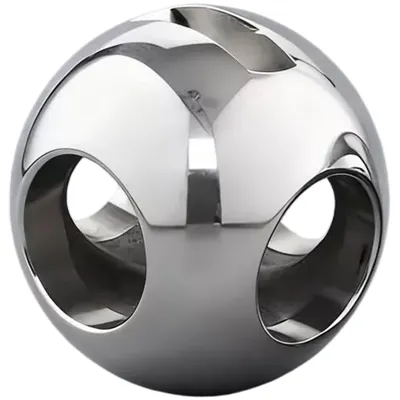
The geometry of the three - way valve ball plays a significant role in its functionality. The ball typically has three ports, which can be arranged in different configurations. The most common configurations are L - port and T - port.
An L - port three - way valve ball allows for the diversion of fluid flow between two of the three ports. It is commonly used when the system requires the ability to switch between two different flow paths. For example, in a heating system, an L - port valve ball can be used to direct hot water either to the radiators or to the domestic hot water tank.
A T - port three - way valve ball, on the other hand, enables the mixing or splitting of fluid flow. It can be used to blend two different fluids or to distribute a single fluid to multiple outlets. In a chemical mixing process, a T - port valve ball can be used to control the ratio of two different chemicals being mixed.
The size and shape of the ports also need to be carefully designed. The port diameter should be selected based on the required flow rate and pressure drop. A larger port diameter generally results in lower pressure drop but may require a larger valve body. The shape of the ports can also affect the flow characteristics, such as turbulence and cavitation.
Sealing Mechanism
A reliable sealing mechanism is essential for a three - way valve ball to prevent leakage. There are two main types of sealing: soft sealing and metal - to - metal sealing.
Soft sealing uses materials such as rubber or PTFE (polytetrafluoroethylene) to create a tight seal between the ball and the valve seat. Soft seals offer excellent sealing performance, even at low pressures. They are also suitable for applications where the fluid contains particles or debris, as the soft material can conform to the surface irregularities. However, soft seals may have limitations in high - temperature or high - pressure applications.
Metal - to - metal sealing relies on the contact between the metal ball and the metal valve seat. It provides better resistance to high temperatures and pressures but may require more precise machining to ensure a proper seal. Metal - to - metal seals are commonly used in applications such as oil and gas pipelines, where the operating conditions are harsh.
Actuation
The actuation method of a three - way valve ball determines how the valve is controlled. There are several options available, including manual, electric, pneumatic, and hydraulic actuation.
Manual actuation is the simplest and most cost - effective method. It involves using a handwheel or lever to turn the valve ball. Manual valves are suitable for applications where the valve does not need to be operated frequently or where there is no access to power.
Electric actuation uses an electric motor to turn the valve ball. It offers precise control and can be easily integrated into automated systems. Electric valves are commonly used in industrial processes where remote control and automation are required.
Pneumatic actuation uses compressed air to operate the valve. It is fast - acting and suitable for applications where quick response times are needed. Pneumatic valves are widely used in manufacturing and process industries.
Hydraulic actuation uses hydraulic fluid to drive the valve. It can provide high - torque operation and is suitable for large - scale valves or applications where high forces are required.
Flow Characteristics
The flow characteristics of a three - way valve ball are important for ensuring efficient fluid control. Factors such as flow coefficient (Cv), pressure drop, and flow direction need to be considered.
The flow coefficient (Cv) is a measure of the valve's capacity to pass fluid. It is determined by the valve's size, port configuration, and internal design. A higher Cv value indicates a larger flow capacity. When selecting a three - way valve ball, it is important to choose a valve with a Cv value that matches the required flow rate of the system.
Pressure drop is the difference in pressure between the inlet and outlet of the valve. A high pressure drop can result in energy losses and reduced system efficiency. The design of the valve ball, including the port shape and size, can affect the pressure drop. It is important to minimize the pressure drop while maintaining the required flow rate.
The flow direction also needs to be considered. In some applications, the valve may need to be designed to handle bi - directional flow. The internal design of the valve ball and the sealing mechanism should be able to accommodate bi - directional flow without leakage.
Compatibility with Other Components
A three - way valve ball is often part of a larger fluid control system. It needs to be compatible with other components such as pipes, pumps, and sensors.
The connection type of the valve ball, such as threaded, flanged, or welded, should match the connection type of the pipes in the system. This ensures a proper and leak - free connection.
The valve ball should also be compatible with the pumps in the system. The flow rate and pressure requirements of the valve should be within the capabilities of the pump.
In addition, the valve ball should be able to work in conjunction with sensors in the system. For example, a pressure sensor may be used to monitor the pressure drop across the valve, and a flow sensor may be used to measure the flow rate. The valve ball should be designed to allow for easy installation and integration of these sensors.


Specialized Design Considerations
In some applications, there may be specialized design considerations for a three - way valve ball.
For example, in applications where the fluid is highly viscous, the valve ball may need to be designed with a larger port diameter or a special surface finish to reduce the resistance to flow.
In applications where the fluid contains solid particles, the valve ball may need to be made of a wear - resistant material or have a self - cleaning mechanism to prevent clogging.
In applications where the valve needs to operate in a cryogenic environment, the material of the valve ball should be able to withstand low temperatures without losing its mechanical properties.
Comparison with Other Valve Balls
It is also useful to compare three - way valve balls with other types of valve balls, such as Floating Valve Ball, Hollow Valve Ball, and Four - way Valve Ball.
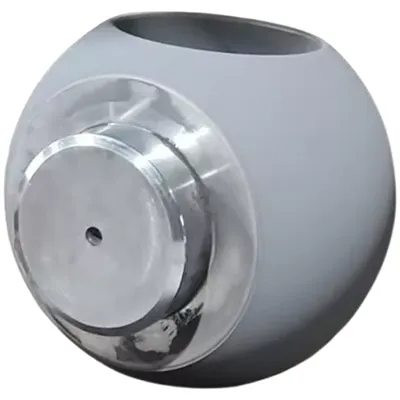
Floating valve balls are designed to float within the valve body, which allows for better sealing under different pressures. They are commonly used in applications where high - pressure sealing is required.
Hollow valve balls are lighter in weight and can be used in applications where weight is a concern. They may also offer some advantages in terms of cost and material usage.
Four - way valve balls have four ports, which provide more flexibility in fluid control. They can be used in applications where more complex flow patterns are required, such as in some hydraulic systems.
As a supplier of three - way valve balls, we understand the importance of these design considerations. We are committed to providing high - quality products that are tailored to the specific needs of our customers. Whether you are looking for a valve ball for a simple plumbing application or a complex industrial process, we have the expertise and resources to meet your requirements.
If you are interested in purchasing three - way valve balls or have any questions about our products, please feel free to contact us for a detailed discussion. We look forward to working with you to find the best solutions for your fluid control needs.
References
- Smith, J. (2018). Valve Design Handbook. Elsevier.
- Johnson, R. (2019). Fluid Control Systems: Principles and Applications. McGraw - Hill.
- Brown, A. (2020). Industrial Valve Technology. Wiley.